
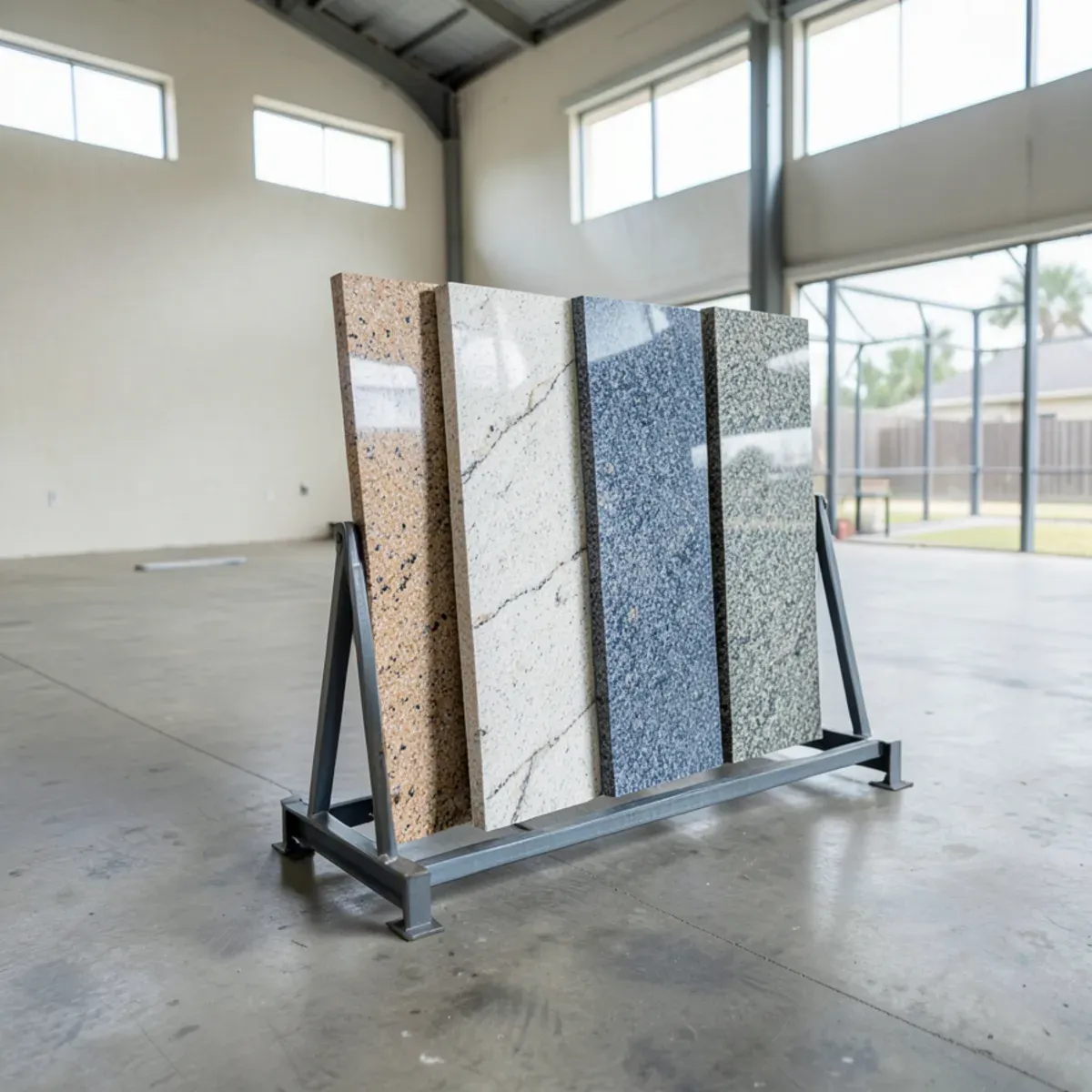
Granite levels, usually Level 1 to Level 5 or Group A to F, are price tiers a stone distributor assigns to each color by rarity, steadiness of supply and the cost to quarry and ship it. They are not a strength or durability grade, and no industry standard defines them, so one supplier's Level 2 may be another's Level 3.
Homeowners usually meet granite levels on a price sheet: the same kitchen priced in three colors comes back with three different numbers, and the difference is labeled Level 1, Level 3, Level 5. It is easy to assume the higher number is a better or tougher stone. Most of the time it is simply a scarcer one.
Here is what a level does and does not tell you, how levels tend to line up with color and pattern, and how to use them to stay on budget when you choose a slab for a kitchen in Fort Pierce or anywhere on the Treasure Coast.
What Do Granite Levels Actually Measure?
A level is a distributor's way of grouping colors that cost it roughly the same to bring in, so it can publish one price for the whole group. The factors behind that cost have little to do with how the stone performs on your cabinets.
- Rarity: some colors come from a single quarry or a narrow seam; others are quarried in volume in several countries
- Yield: quarries that produce large, sound blocks waste less stone than ones where much of each block is fractured
- Consistency: uniform speckled stones are easy to match across slabs; dramatic patterns can force more waste
- Distance and handling: quarry location, shipping and import costs add up before a slab reaches Florida
- Demand: a color that suddenly becomes popular can move up a tier, and one falling out of fashion can move down
Want a straight answer for your kitchen? Call the shop.
Free in-home estimates · Mon–Fri 7:00–4:30 · weekend estimates by appointment
Is There an Industry Standard for Granite Levels?
No. There is no governing body or published standard that defines what Level 1 or Level 4 must be. Each distributor builds its own tiers, names them its own way (levels, groups, letters, or words like commercial and exotic) and revises them when quarry output or demand changes.
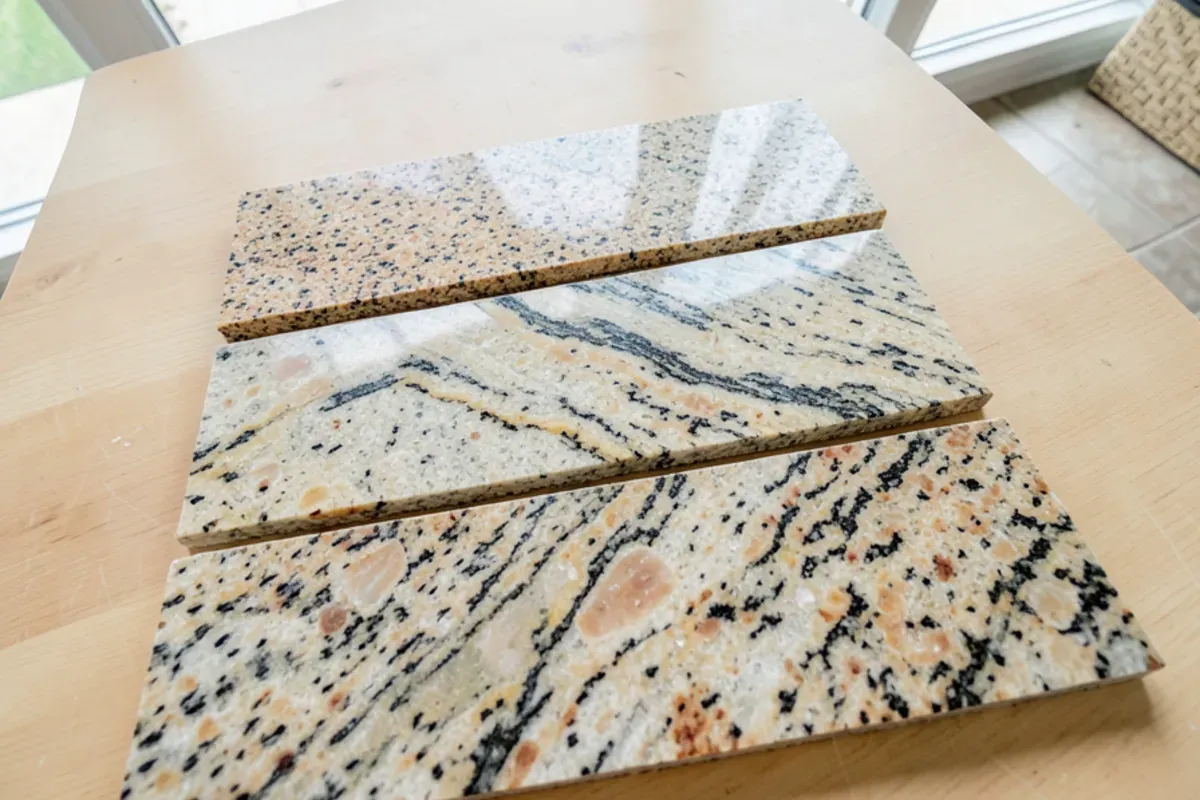
The same color name can also cover stone from different parts of a quarry, so two slabs sold under one name may look noticeably different. That is another reason to see the slab, or at least a recent photo of it, before it is cut.
Is Higher-Level Granite Stronger or Better?
Not by itself. Granite's hardness comes from its minerals, mainly quartz and feldspar, and many of the most common entry-level colors are dense, tough stones that have served in kitchens for decades. A higher level buys you rarity and look.
| Question | Does the level answer it? | What does answer it |
|---|---|---|
| How much will the slab cost? | Yes, within one distributor's list | The written quote |
| How rare is the color? | Roughly | The distributor's supply of that color |
| How hard or scratch-resistant is it? | No | The stone's mineral makeup |
| How porous is it, and how often will it need sealing? | No | A water-drop test on a sample |
| Does this slab have cracks or heavy resin repairs? | No | Looking at the actual slab |
Some stones sold in upper tiers have more natural fissures, or are marble, dolomite or quartzite sold under a granite trade name, and they may need gentler care than a basic speckled granite. Ask what the stone actually is.
How Do Levels Usually Line Up With Color and Pattern?
Every list is different, but a loose pattern shows up across most of them. Treat the examples below as typical, not fixed; the color you like could sit a tier higher or lower at a particular supplier.
- Lower tiers: small, even speckles in tan, gray, green-black or gold; widely quarried colors such as Uba Tuba, Santa Cecilia, New Venetian Gold or Luna Pearl often land here
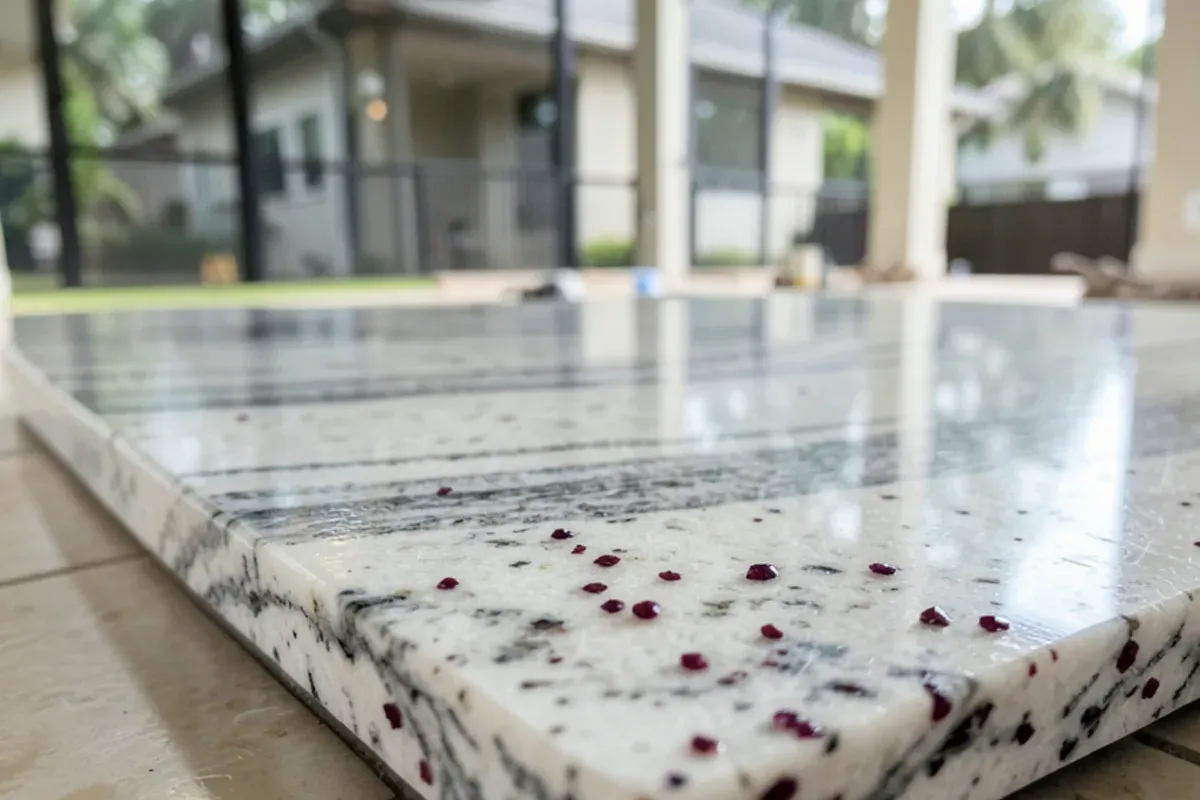
- Middle tiers: lighter backgrounds and more movement, including many white and gray granites such as Alaska White, Colonial White or River White
- Upper tiers: bold veining, large crystals, blues and unusual colors from single quarries, plus stones prized for their scale of pattern
White and light granites are worth a closer look if you want a bright kitchen without the upkeep of marble; our white granite countertops page compares the common ones. For the whole range of colors and finishes we fabricate, start at our granite countertops page.
How Should You Use Levels When You Pick a Slab?
- Set a level range for your budget before you look, so you are not choosing from a full price list.
- Pick one color you love and ask for two lower-level colors with a similar background and tone.
- Look at full slabs, not just samples; pattern scale only shows on the full stone.
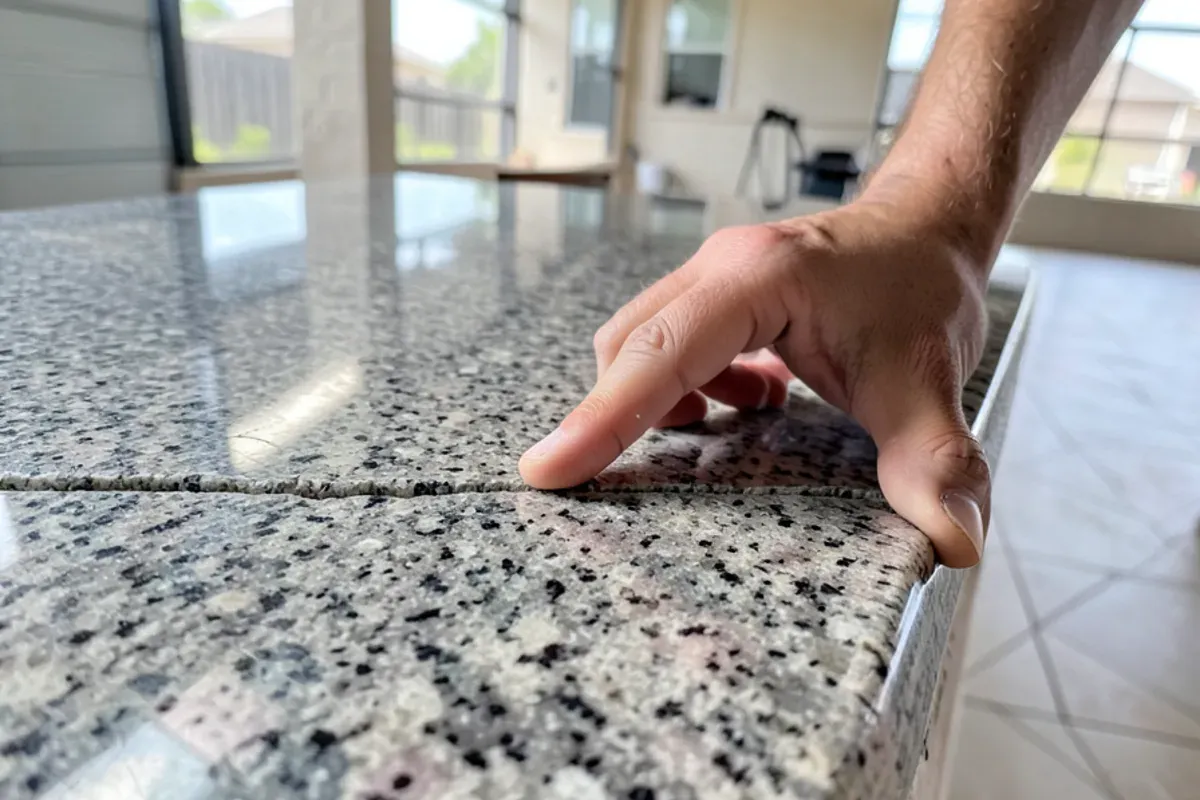
- Check the slab surface for fissures (natural lines you cannot feel) versus cracks (lines you can catch with a fingernail).
- Get the color name, level and slab count written on the estimate.
Slab count often matters as much as level. A large island and long perimeter runs in a Vero Beach barrier-island kitchen can need an extra slab, and an upper-tier color multiplies that cost. A smaller galley might afford a higher level for the same budget.
Does a Higher Level Raise Fabrication and Install Costs Too?
Mostly it raises the stone line. Measuring, cutouts and setting the tops take about the same work in a common speckle as in a rare color. A few exceptions come with the stones that tend to sit in upper tiers.
| Part of the quote | Moves with the level? | Why |
|---|---|---|
| Slab material | Yes, directly | The level is the distributor's price for that color |
| Number of slabs | Not by itself | Set by your layout, but each extra slab costs more in a higher tier |
| Template and install | Rarely | The same visit and the same setting work for any sound slab |
| Cutting and edges | Sometimes | Stones with many fissures, or quartzite sold under a granite name, cut slower and need more care |
| Vein matching at seams | Often | Bold patterns may need extra stone so the movement lines up across a joint |
| Reinforcement | Sometimes | Fragile slabs may need rods set into the stone near the sink cutout, or come mesh-backed and resin-filled |
So the gap between two quotes for a Level 1 and a Level 4 kitchen is mainly stone, plus any extra slab the pattern demands. If the gap looks bigger than that, ask which other line moved and why.
From Our Shop: Look Past the Level at the Slab Itself
When we help someone choose granite, we spend more time on the individual slab than on its tier. Two slabs of the same color and level can differ in pattern, in how much resin has been used to fill pits, and in where the natural fissures run. Those details decide where we place seams and sink cutouts.
We also see people pay for a higher level when a lower-tier stone would have given them the look they described. Bring a cabinet door or floor tile sample to the estimate, tell us what you are after, and we'll suggest colors across a couple of levels so you can see what the extra money actually buys.
For small pieces, a higher level can be within reach. Upper-tier colors leave offcuts after big kitchens, and a vanity or bar top cut from one costs a fraction of a full slab in that color. The catch is that you choose from what is on hand, so ask about granite remnants early if you have a smaller project in mind.
Questions We Hear About This
Does Level 1 granite mean low quality?
No. Level 1 usually means the color is common and the supply is steady, so the distributor can price it low. Many entry-level granites are hard, dense and easy to keep. Quality depends on the individual slab: its soundness, its finish and how well it is fabricated. When we measure a kitchen, we look at the slab you are considering for cracks and heavy fills before recommending it.
Why is the same granite color a different level at another supplier?
Because levels are set by each distributor, not by an industry standard. One distributor may buy a color in volume and price it a tier lower; another may import less of it, or get it from a different part of the quarry, and price it higher. Tiers also shift over time with demand. Compare the color name and actual slab rather than the level number.
Is white granite always a higher level?
Not always, though many white and light gray granites sit in middle tiers because clean, light backgrounds are in demand and good blocks are harder to find. A few common whites are priced lower, and some dramatic whites sit at the top. Light granites also tend to be more porous, so they may need sealing more often than darker speckled stones.
How many granite levels are there?
It depends on the distributor. Many lists run from Level 1 to Level 5, some use groups lettered A through F, and others add a top tier with a name such as exotic. A few suppliers keep only three bands. The count matters less than where your color sits on the list your fabricator buys from, so ask for the color's tier at that specific supplier.
The Bottom Line
A granite level is a price tag for rarity and supply, set by whoever sells the slab. It says nothing reliable about strength, and there is no shared scale between suppliers. Choose the look first, then use levels to find the most affordable stone that gives you that look.
If you want help comparing colors across levels, call us for a free in-home estimate. We'll measure, talk through the slab count your layout needs and put the color, level and price in writing.