
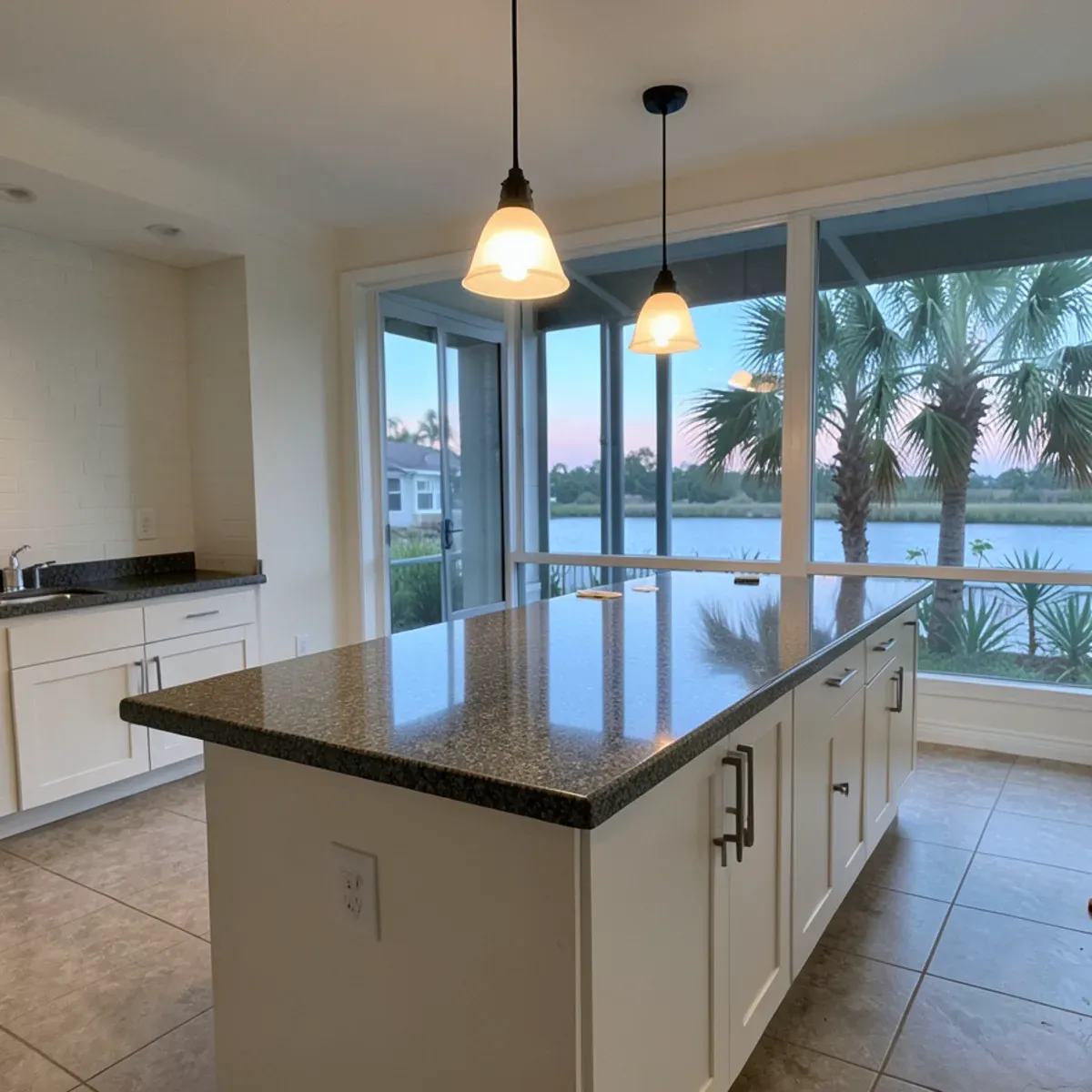
Polished granite is glossy, shows the deepest color and resists stains best. Honed granite is flat and matte but shows oils and needs sealing more often. Leathered granite has a soft, textured sheen that hides fingerprints and water spots well. For most busy kitchens, polished or leathered is the easier daily choice; honed suits owners who want a quiet matte look and don't mind more wiping.
The finish is the last thing done to a granite slab and one of the first things you notice in a kitchen. It changes how dark the stone looks, how light bounces off it, what your hand feels, and how much a fingerprint or water ring shows. The same color can look like three different stones in three finishes.
This comparison is written for the way Florida kitchens get used: sun through sliders, wet hands from the pool, a lot of cooking with oil, and guests leaning on the island.
What Is the Difference Between Honed, Leathered and Polished Granite?
All three start the same way. The slab is ground flat with abrasives, then the finish depends on where the process stops and what tool is used.
- Polished: ground with progressively finer abrasives until the surface reflects light like glass. The pores are tight, and the color looks its richest.
- Honed: the same process stopped before the gloss. The result is smooth and flat, with a matte or satin look and a lighter appearance than polished.
- Leathered: brushed with coarse diamond brushes that wear away softer minerals and leave the harder ones slightly raised, giving a gentle texture and a low sheen.
Want a straight answer for your kitchen? Call the shop.
Free in-home estimates · Mon–Fri 7:00–4:30 · weekend estimates by appointment
How Do Shine, Fingerprints and Stains Compare?
| Feature | Polished | Honed | Leathered |
|---|---|---|---|
| Look | High gloss, mirror-like in strong light | Flat matte, soft and quiet | Low sheen with visible texture |
| Color depth | Deepest, richest color | Lighter and more muted | Rich, close to polished |
| Fingerprints and smudges | Visible on dark stones | Oils show as dark marks | Hidden well |
| Water spots and rings | Show on dark polished stone | Show, and can soak in | Mostly hidden |
| Stain resistance | Highest; pores are tight | Lowest of the three | Middle |
| Sealing | Least often | Most often | In between |
| Crumbs and cleaning | Wipes clean in one pass | Wipes clean but shows streaks | Texture can hold crumbs; use a soft brush |
| Glare under skylights or sliders | Most glare | Least glare | Little glare |
None of the finishes changes the stone's hardness or its tolerance of hot pans. What changes is how marks show and how often the surface needs sealing.
Which Finish Suits Black Granite?
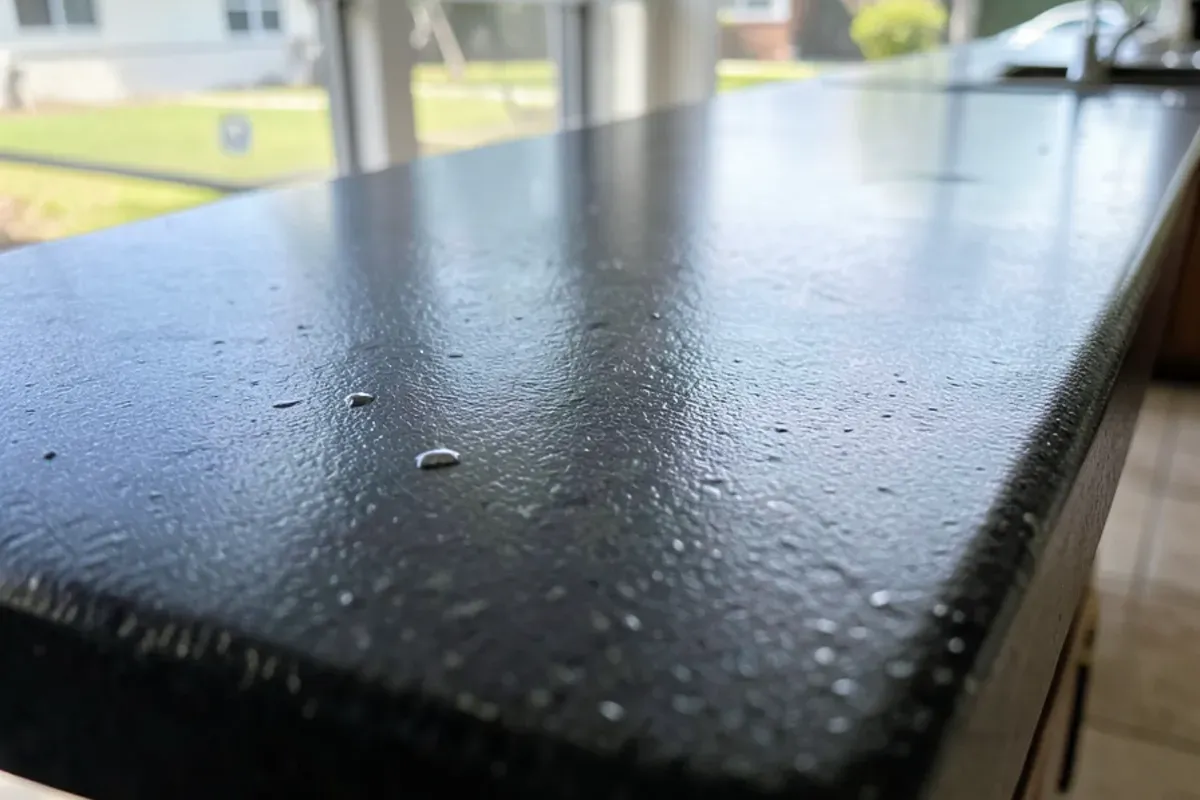
Black granite shows the differences most clearly. Polished absolute black reflects every streak and dried drip. Honed black tends to look charcoal gray and shows grease marks as darker patches, which is why some owners have it treated with a color enhancer. Leathered black keeps a deep color, hides fingerprints and is one of the most practical dark surfaces a busy kitchen can have.
Our black granite countertops page goes further into dark stone, including how to check a black slab for dye before it is cut.
Does the Finish Change Slab Choice, Cost or Timing?
It can. Polished is the default, so nearly every color is stocked that way. Leathered and honed slabs are usually finished before they reach the fabricator, and not every color is offered in every finish; leathering in particular works best on hard, dense stones. If you want a specific color in a specific finish, ask early so availability does not hold up the template.
- Ask whether the color you like comes leathered or honed from the distributor, or only polished
- Ask how the edges will be finished to match the top; a glossy edge on a leathered top looks out of place
- Ask whether the finish changes the price of that color at that supplier
To see the full range of colors and finishes we fabricate and install, start with our granite countertops page.
How Do You Match the Finish to the Way You Live?
- Lots of cooking with oil, kids at the island: polished or leathered
- Dark stone and wet hands from the pool: leathered
- Bright kitchen with skylights or a west-facing slider: honed or leathered to cut glare
- Wants a soft, old-world look and wipes often: honed
- Rental or busy household: polished, for the easiest stain resistance
In waterfront kitchens around Jupiter, where strong light comes off the water, a leathered or honed top cuts the glare a polished one throws back. In older Fort Pierce homes with smaller windows, polished stone can brighten a darker kitchen.
What Does Each Granite Finish Need Day to Day?
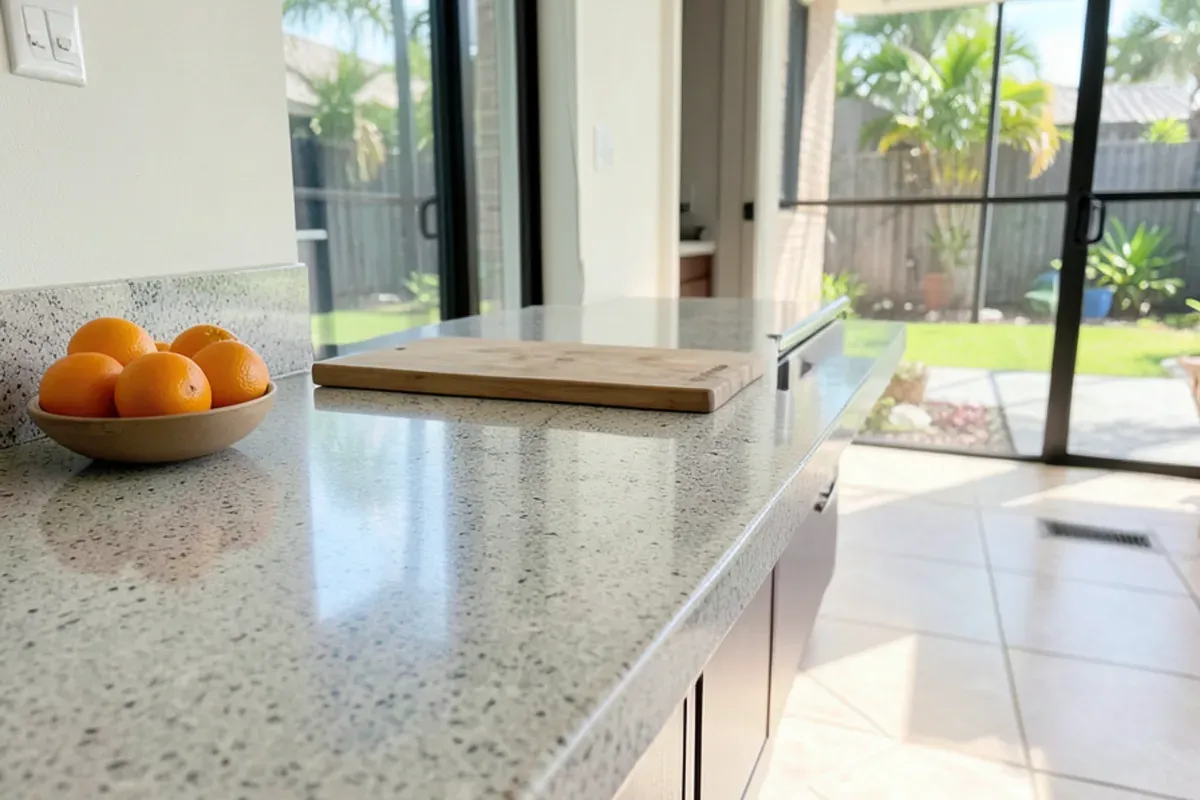
Every finish cleans with warm water, a little mild dish soap and a soft cloth. The differences are in what builds up and what to watch for between water tests.
| Finish | Daily habit that helps | What builds up | How marks are usually handled |
|---|---|---|---|
| Polished | Dry dark tops with a microfiber cloth after wiping | Streaks and dried hard-water spots | Spots wipe off; dull patches from harsh cleaners can be re-polished |
| Honed | Blot oil and butter right away, near the range especially | Dark oil patches in the open surface | Fresh oil often fades as it dries; set marks may need a poultice |
| Leathered | Sweep crumbs out of the texture with a soft brush | A grease film in the low spots by the cooktop | A stone-safe cleaner and a soft brush lift the film |
Whatever the finish, skip vinegar, bleach and scouring powder as everyday cleaners. On honed and leathered stone they wear the sealer faster, and on polished stone they can leave a hazy patch where the gloss used to be.
How Do Seams and Edges Look in Each Finish?
Seams are joined with a color-matched epoxy, and the finish changes how much that line shows. On polished stone the fill is ground and polished flush, so on a busy speckle it nearly disappears. On honed stone the joint sits flat and matte, and it blends well. On leathered stone the fill is smooth while the stone around it is textured, so the seam can catch light a little differently from a low angle.
- Leathered tops: plan seams away from the middle of the island and the main view from the living area
- Edges: the profile is finished in the shop to match the top, so an eased or bevel edge is the easiest to blend on a textured surface
- Mixed finishes: a polished perimeter with a leathered island works well, but ask for both from the same slab lot so the color matches
From Our Shop: Run Your Hand Across the Sample
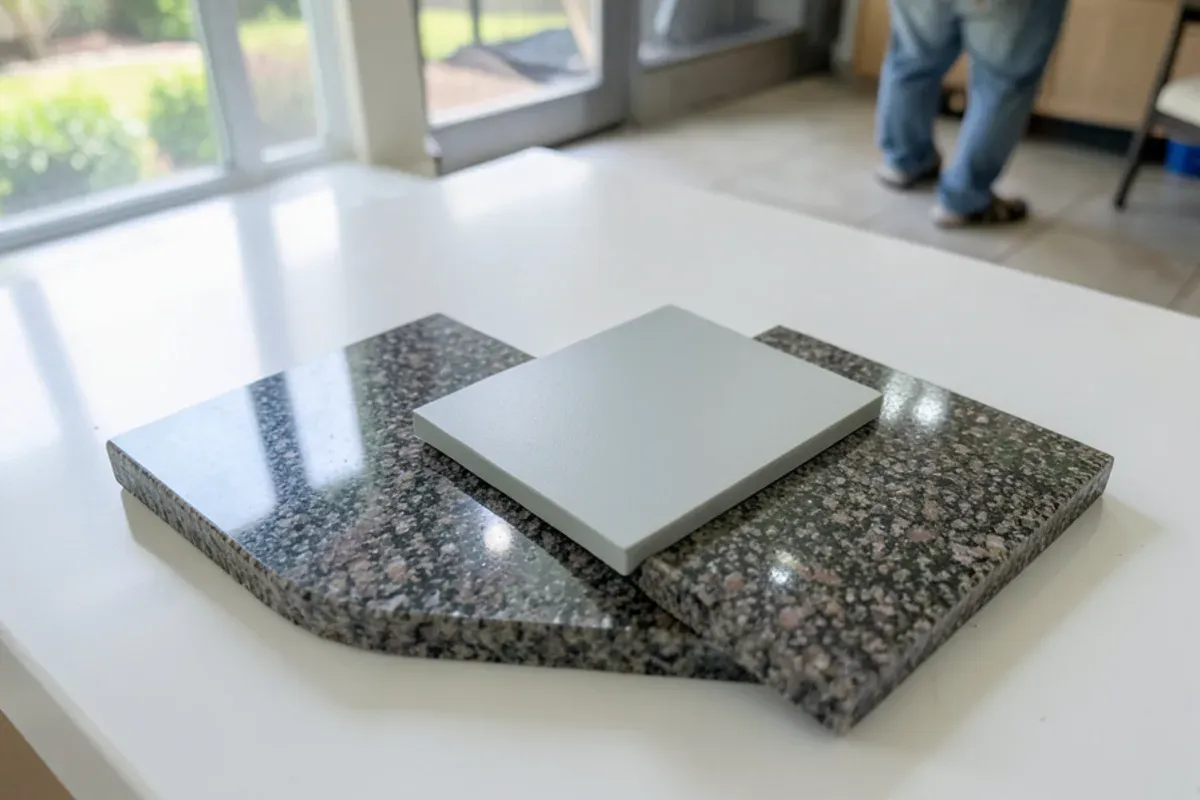
When people can't decide between finishes, we suggest getting a sample of each, pressing a thumb on it, wiping it with a damp cloth and looking at it under the kitchen's own light. Within a minute most people know. The leathered sample hides the thumbprint; the honed one shows a damp mark for a while; the polished one gleams.
We also point out the edges. Whatever finish you choose for the top, the edge profile is finished to match it, and a soft eased edge suits honed and leathered stone better than a sharp, glossy ogee. Decide the finish before you settle the edge.
One honest trade-off we mention: the finish is easiest to choose and hardest to change. Turning a polished top matte, or bringing a honed top back to gloss, means wet grinding in your kitchen, and the result can differ slightly at the seams and around the sink. If you are torn, live with a sample on the counter for a week of normal cooking before the slab is cut.
Questions We Hear About This
Is leathered granite harder to clean?
Not really, though it cleans a little differently. The texture can hold fine crumbs and flour, so a quick pass with a soft brush or a damp microfiber cloth works better than a paper towel. In return, it hides fingerprints, water spots and smudges that polished dark stone shows. Mild soap and water is all it needs day to day. We seal leathered tops at install, as with any granite.
Can polished granite be honed later?
It can be done, but it is a refinishing job in your kitchen rather than a simple cleaning, and it changes the stone's color and how often it needs sealing. Results also vary with the stone. If you are unsure about gloss, it is far easier to choose the finish before fabrication. Bring the question to the estimate and we'll go over how your color looks in each finish.
Does honed granite need more sealing?
Usually, yes. Honing leaves the pores more open than polishing, so water and oil soak in more readily, and honed tops often darken sooner in a water-drop test. Plan on testing every few months, especially around the sink and cooktop, and resealing when water darkens the surface. Using a pH-neutral cleaner instead of vinegar or bleach also helps the seal last longer.
Should honed black granite get a color enhancer?
It is an option, not a requirement. A color enhancer is a penetrating treatment that darkens matte stone back toward the deep black of polished granite. It wears unevenly where the counter works hardest, so the sink and cooktop areas can turn gray before the rest and need reapplying. Try it on an offcut of the same slab first, so you see the result before the top is treated.
The Bottom Line
Polished gives the deepest color and the easiest stain resistance, leathered gives the most forgiving everyday surface, and honed gives the quietest look for the most upkeep. Choose by how you use the kitchen and the light it gets, then make sure your color comes in that finish.
Call us for a free in-home estimate; we'll talk through which finishes your color comes in and how each will behave at your own counter before anything is ordered.