
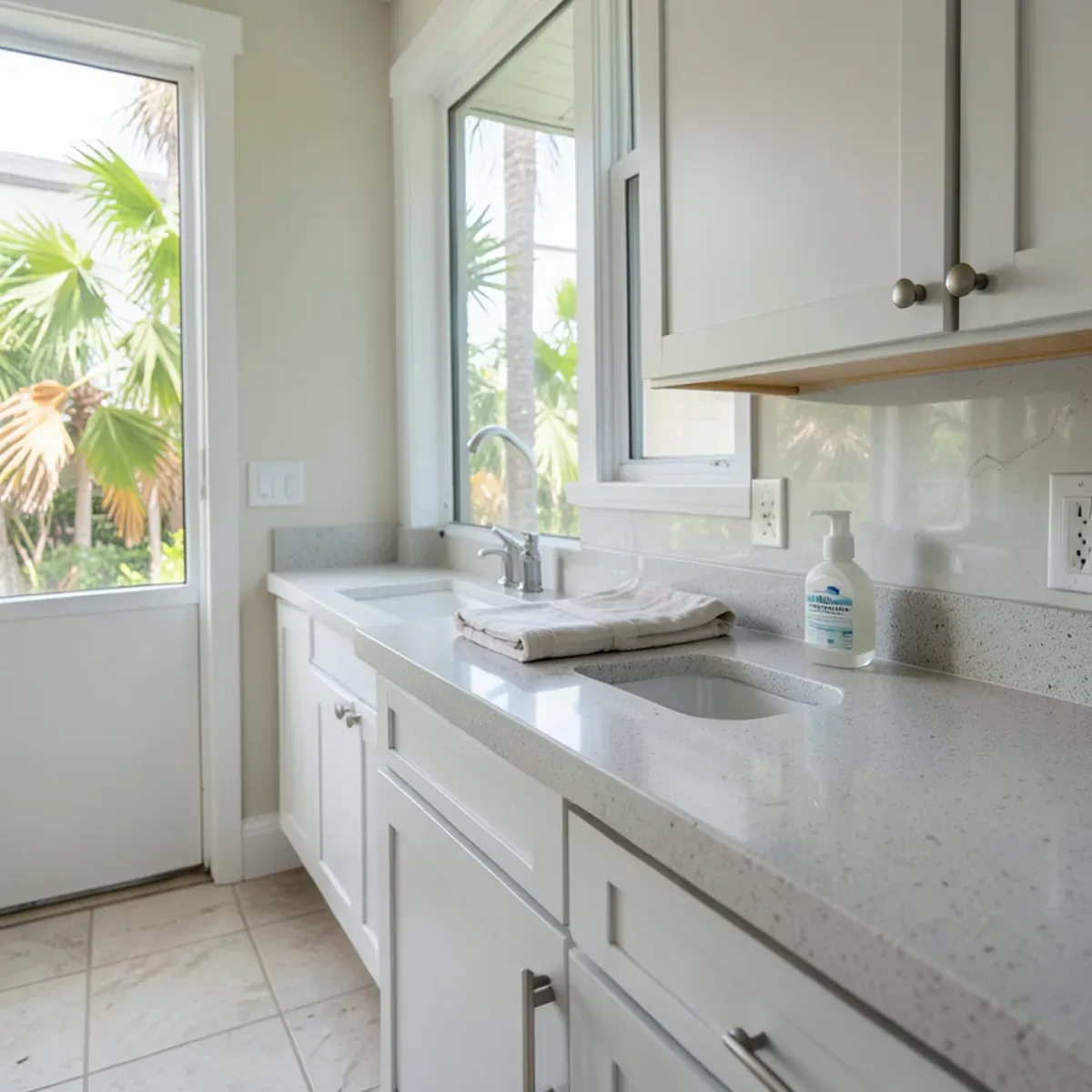
Clean quartz with warm water, a few drops of mild dish soap and a soft cloth, then dry it. Skip bleach, oven cleaner, strong degreasers, abrasive powders and scouring pads, and never apply stone sealer or wax. Those products dull or discolor the resin surface instead of protecting it.
Quartz is one of the easiest countertops to live with because it is non-porous and never needs sealing. That ease is also how it gets damaged: owners assume a tough surface can take any cleaner under the sink, and the wrong spray does more harm over a year than a decade of cooking.
Here is the routine we explain at every quartz hand-off, plus the products to keep away from it and the right way to deal with dried-on messes.
What Does Everyday Quartz Care Look Like?
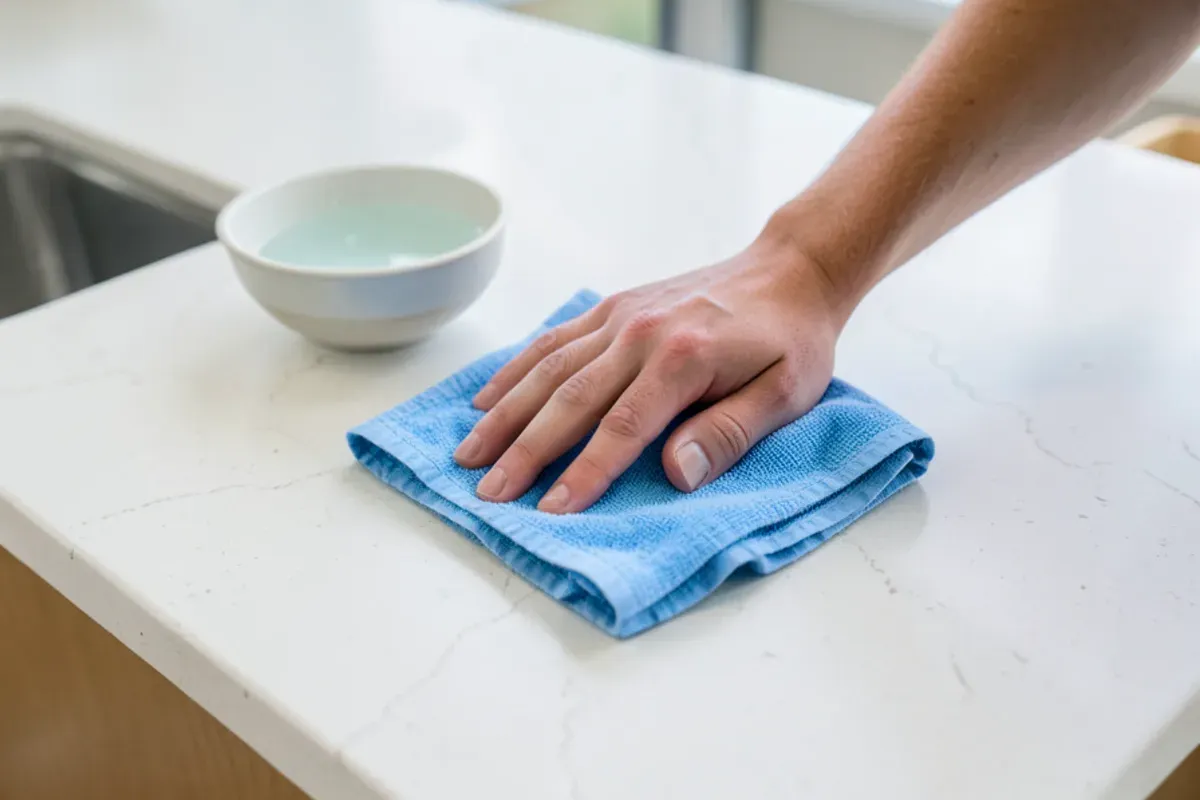
- Wipe crumbs and liquid as you go with a damp microfiber cloth
- At the end of the day, wash the surface with warm water and a little mild dish soap
- Rinse the cloth and wipe again so no soap film is left to streak
- Dry with a clean towel, which keeps water spots off dark colors
- Once a week, use a non-abrasive cleaner labeled safe for quartz on any greasy areas near the range
That is the whole routine. No sealing, no polishing, no conditioning. If a product promises to add shine to quartz, it is usually adding a film that will look cloudy within weeks.
Want a straight answer for your kitchen? Call the shop.
Free in-home estimates · Mon–Fri 7:00–4:30 · weekend estimates by appointment
Which Cleaners Should Never Touch Quartz?
Most quartz damage we hear about comes from a bottle, not a pan. The resin that binds the stone reacts badly to harsh chemistry and grit.
| Product | What it does to quartz | Use instead |
|---|---|---|
| Bleach and chlorine sprays | Can discolor or dull the surface with repeated use | Mild soap and water, or a quartz-safe disinfectant |
| Oven cleaner and grill degreaser | Highly alkaline; can damage the resin | Warm soapy water and a soft scrub sponge |
| Abrasive powders, steel wool, scouring pads | Scratch and dull the polish | Non-scratch sponge or plastic scraper |
| Paint thinner, strippers, harsh solvents | Can soften or stain the resin | Wipe spills immediately; ask before using any solvent |
| Stone sealers, waxes, shine sprays | Leave a haze on a non-porous surface | Nothing; quartz needs no sealing |
| Strong acidic cleaners used daily | May dull the finish over time | Neutral pH cleaners |
Always check the care sheet for your specific slab. Manufacturers differ on details such as disinfecting wipes and glass cleaner, and following their guidance keeps your product warranty on solid ground.
How Do You Get Dried Spills Off Quartz Without Scratching It?
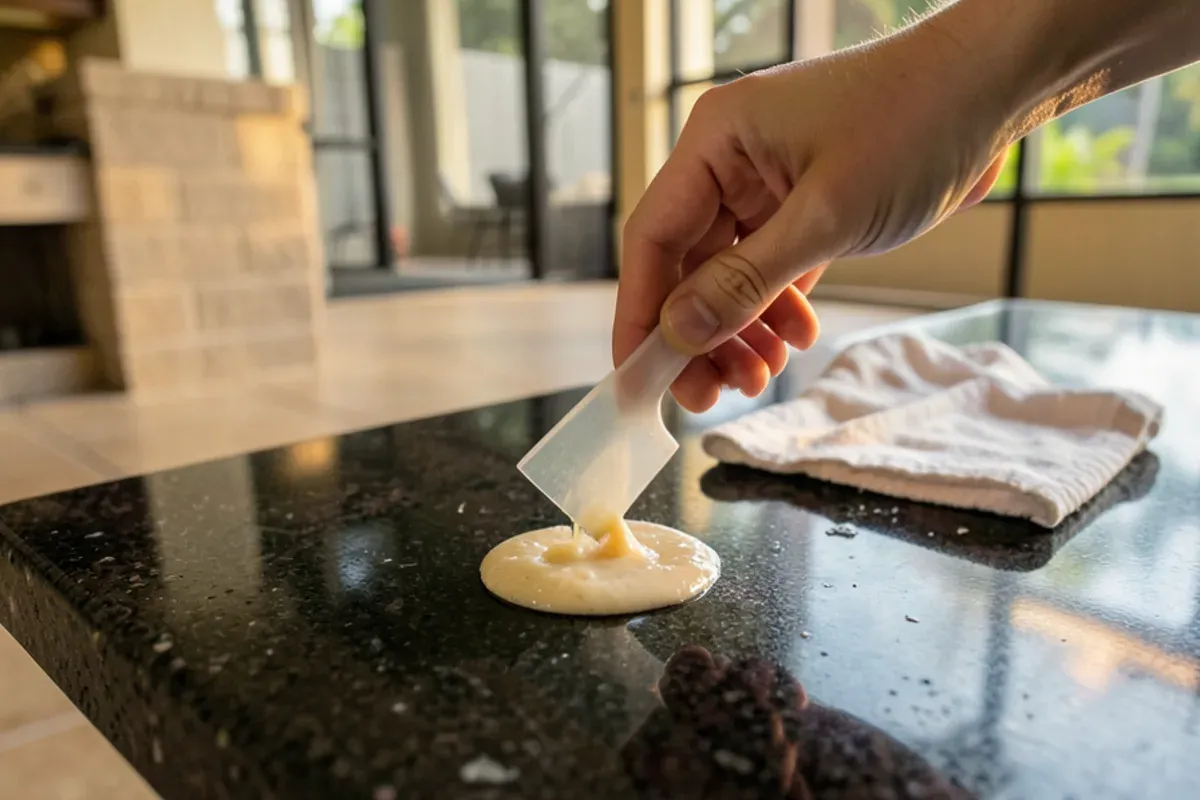
Dried pancake batter, candle wax, gum or a drip of paint all come off the same way: soften, then lift.
- Lay a warm, damp cloth over the spot for a few minutes to soften it
- Hold a plastic scraper or an old credit card at a low angle and push gently under the edge
- Wipe the residue with soapy water and dry the area
- For mineral rings around the faucet, common in homes on private wells, use a cleaner labeled for quartz and hard water rather than a scouring pad
- For marker or ink, try a quartz-safe cleaner first and test any stronger product in a hidden spot
Never use a metal blade. Even a careful pass with a razor can leave a fine scratch that catches light at the wrong angle forever.
Does White Quartz Need Different Care?
The routine is the same, but timing matters more. Coffee, red wine, turmeric and tomato sauce will not soak into quartz, yet a ring left overnight on a bright white surface is more noticeable and can take extra scrubbing. Wipe colored spills as they happen. Our white quartz countertops page covers the stain and sun questions owners of light colors ask most.
Sun is the other factor. Strong direct light through a west-facing slider can slowly warm the tone of some whites over years. A sheer shade during the harshest afternoon hours costs little and keeps the color even across the counter.
On the barrier island side of Vero Beach, the hidden abrasive is beach sand carried in on bags, coolers and towels. Brush it off before sliding anything across the counter; fine grit under a heavy bag can dull a polished finish.

Beyond the Daily Wipe: A Simple Quartz Upkeep Schedule
The slab itself needs nothing beyond washing. The joints and edges around it are what deserve a look now and then.
| How often | Task | What you are looking for |
|---|---|---|
| Weekly | Degrease the counter beside the range and under small appliances | A tacky film that daily wiping misses |
| Weekly | Brush the rim of the undermount sink | Grime packed into the joint under the lip |
| Monthly | Check the silicone bead where sink, backsplash and top meet | Dark spots, gaps or peeling |
| Monthly | Open the sink cabinet and look at the cabinet floor | Drips or swelling from the faucet or drain |
| Twice a year | Run a hand across each seam | A ridge or gap that was not there at install |
| Twice a year | Pull out the toaster, mixer and coffee maker | Crumbs and spills that sat for months |
Silicone and seam issues are cheap to deal with when they are small. A bead that lets water under the sink rim, left alone, can soften the cabinet below it.
Closing the House for Summer? Leave the Quartz Like This
Plenty of Treasure Coast owners lock up for the off-season. A few minutes before you leave keeps the counters as you left them:
- Wash and dry every surface, including under appliances, so no sugar or grease sits for months
- Clear fruit bowls, metal cans and anything that can rust or leak onto the top
- Put cleaning sprays back under the sink rather than standing on the counter
- Lower shades on west- and south-facing windows to cut months of strong sun on light colors
- Ask whoever checks the house to look under the kitchen sink for drips, not just at the thermostat
Notes From Our Install Days: Care Starts at the Hand-Off
At the walk-through after an install, we open the cabinet under the sink with the homeowner and look at what cleaners are there. It sounds fussy, but the bottle of bleach spray or oven cleaner is the most common threat to a new quartz kitchen, far ahead of hot pans or knives.
We also point out the seams. They are filled with color-matched epoxy, which tolerates normal cleaning just like the slab but should never see harsh solvents. Treat the seam like the rest of the counter and it will stay tight and level. For a broader look at the material, see our quartz countertops in Fort Pierce overview.
Finish changes the routine more than color does. Honed and matte quartz look soft and calm, but they show fingerprints and cooking oil sooner than a polished face, and the bottoms of metal pans can leave gray streaks on them. Those marks sit on the surface and come off with a non-abrasive cleaner, yet they mean a little more wiping. We tell owners choosing a honed finish about that trade before the slab is ordered, not after.
Questions We Hear About This
Can I use disinfecting wipes on quartz countertops?
Occasional use is generally fine, but read your manufacturer's care sheet first, and avoid wipes that contain bleach. Wipe the area afterward with plain water so residue doesn't build into a dull film. For everyday cleaning, warm water with mild dish soap removes grease and food just as well and costs far less.
Does quartz ever need to be sealed?
No. Quartz is non-porous, so there is nothing for a sealer to soak into. Sealer applied to quartz sits on the surface and dries as a cloudy layer that has to be scrubbed off. Granite, marble and quartzite are the stones that get sealed; quartz just needs regular washing and dry towels.
How should I clean around the seams and the undermount sink?
The same way as the rest of the counter: soap, water and a soft cloth. Under the sink lip, a soft brush clears the edge where grime collects. If the silicone bead where sink meets stone darkens or peels, it can be cut out and replaced, which keeps water from getting under the rim.
Is it safe to cut food directly on quartz?
It is better not to. Quartz resists knife scratches well, but the hard surface dulls blades quickly, and repeated chopping in one spot can leave fine marks that catch the light on a polished slab. A cutting board protects the knife and the counter, and it keeps raw meat juices on a surface you can carry straight to the sink.
The Bottom Line
Quartz care comes down to gentle soap, soft cloths and a short list of products to keep away. Follow it and the surface will look the way it did on install day for years.
Planning quartz for a kitchen in Port St. Lucie, Vero Beach or a town in between? Phone us to set up a no-cost measuring visit; we will help you pick a color that suits how you live and go over its care on install day.