
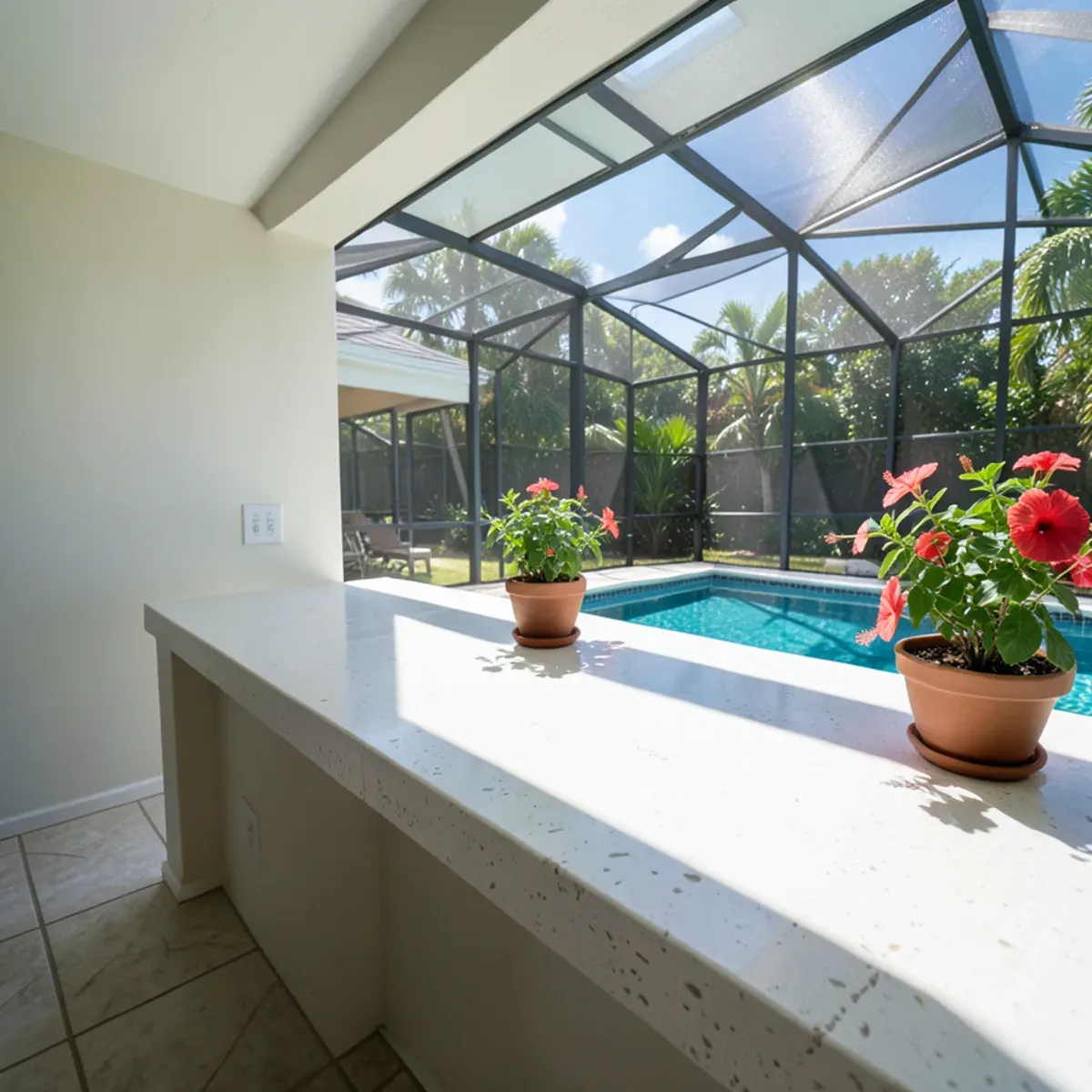
Quartz can go outdoors only with real risk: its resin binder breaks down under ultraviolet light, so the surface can yellow, fade or turn uneven where sun reaches it, and most quartz manufacturers exclude outdoor installations from their warranties. For a sunny Florida lanai, pool deck or patio, granite, quartzite and porcelain slab keep their color far better.
We get this question often from people who love the quartz in their kitchen and want the outdoor kitchen to match. It's a fair thing to want. The answer just depends on chemistry rather than looks, and once you know what quartz is made of, the advice makes sense.
What Is Quartz Made Of, and Why Does Sunlight Matter?
Engineered quartz is crushed natural quartz held together with a polymer resin and colored with pigments. The stone particles themselves are unaffected by sunlight. The resin is the part that reacts: like most plastics, it slowly breaks down under ultraviolet light, and heat speeds the process along.
Indoors, that rarely matters, because window glass and walls keep most direct sun off the counter. Outside, a top can sit in strong sun for hours every day, year-round, which is a very different load. Granite, quartzite and marble formed underground through heat and pressure, so there's no binder to degrade.
Want a straight answer for your kitchen? Call the shop.
Free in-home estimates · Mon–Fri 7:00–4:30 · weekend estimates by appointment
What Does UV Damage Look Like on a Quartz Countertop?
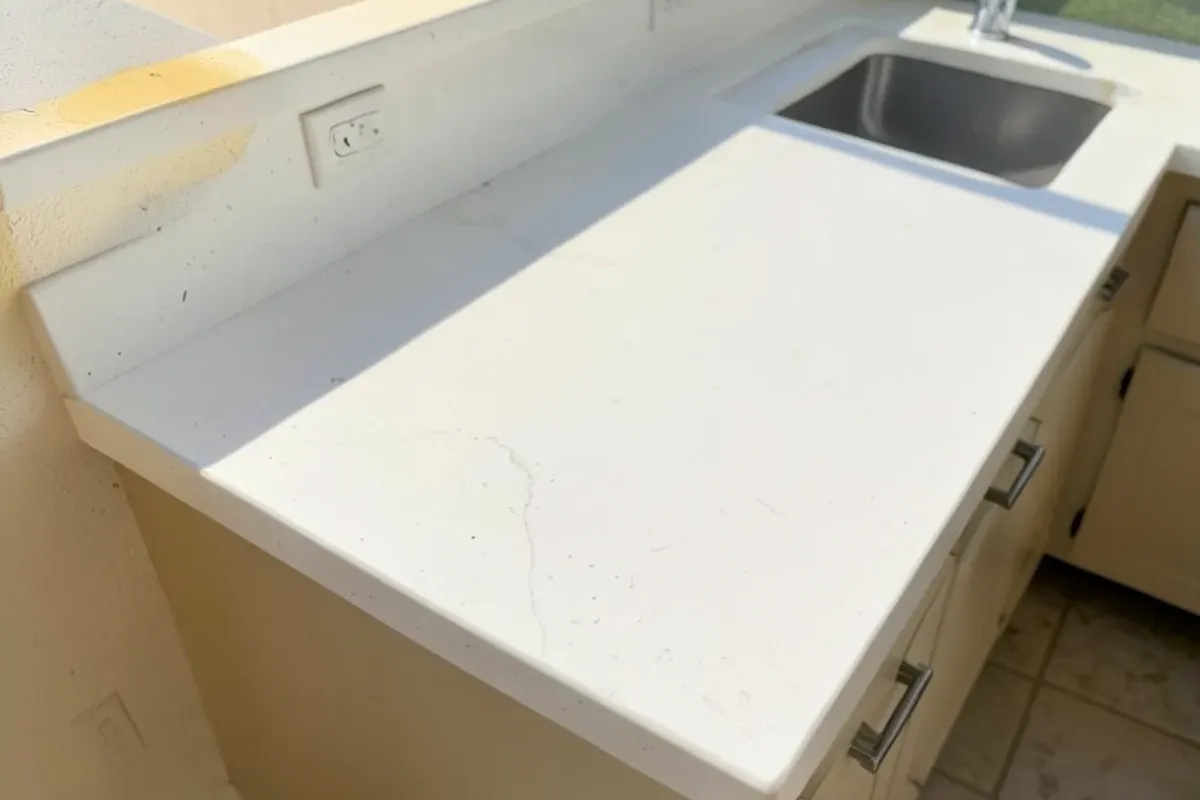
Sun damage on quartz shows up gradually, and it often appears on one part of the top before another. Signs to watch for:
- White and light gray quartz taking on a yellow or cream cast
- Darker colors looking washed out or chalky
- A visible line where the roof's shadow usually falls, with one side lighter than the other
- The polish going dull or hazy in the sunniest section
Because the change happens inside the resin, a cleaner or polish generally won't reverse it. That's the main reason we're cautious: fading isn't a maintenance issue you can fix later, it's built into how the material ages.
Is a Covered Lanai Shady Enough for Quartz?
Often not completely. A lanai roof blocks the high midday sun, but low morning or late-afternoon light comes in under the eaves and lands on the front edge of the counter. Water is another factor: a pool or a lagoon view bounces light up under the roof. Screens soften sunlight but don't stop it.
Homes on the water, like the lagoon-side lots in Jensen Beach, get a lot of that reflected light. Before deciding a spot is shaded, watch it for a full day: note when direct sun touches the counter and for how long. If any part of the top gets regular direct sun, plan on a stone that doesn't care.
How Do You Check How Much Sun a Counter Really Gets?
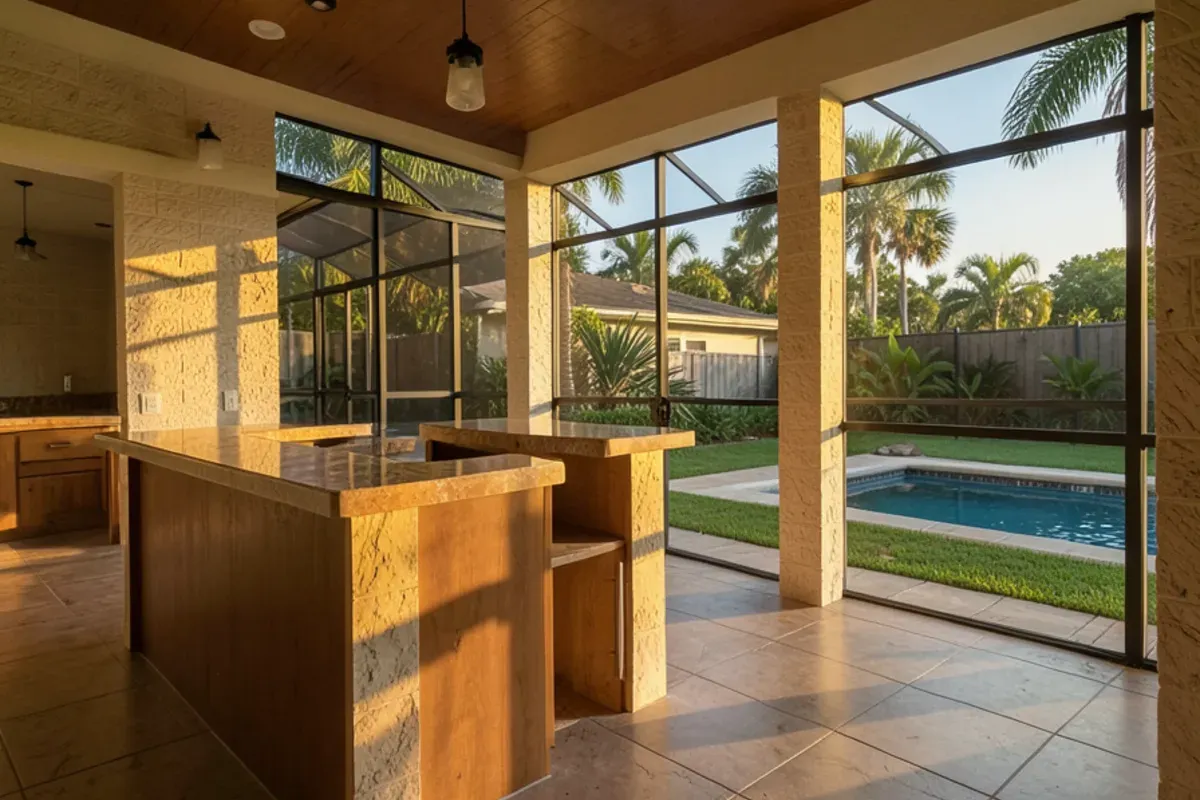
Shade at 10 a.m. in January looks nothing like shade at 6 p.m. in June. A simple sun check takes a few days and settles the question before you buy anything:
- Pick a clear day in summer and, if you can wait, another in winter; summer sun sets toward the northwest and slips under west-facing roofs late in the day, while low winter sun reaches deep under a south-facing lanai
- Look at the counter every two hours from morning to sunset and note whether direct light touches the top or its front edge
- Watch for bright patches reflected off the pool or the water, which reach a counter the roof seems to shade
- Photograph each check from the same spot so you can compare later
- Add up the hours; if direct sun lands on any part of the top most days, treat it as a sun location
That record is also useful at the estimate, because it tells us which edge and which corner need the most attention.
Which Stones Hold Color on a Sunny Florida Lanai?
| Material | Color in UV | Upkeep outdoors | Worth knowing |
|---|---|---|---|
| Granite | Stable | Seal periodically | Dark colors get hot in direct sun |
| Quartzite | Stable | Seal periodically | Light, marble-like looks with high hardness |
| Porcelain slab | Stable; color is fired in | Usually no sealing | Thin; edges and corners need care |
| Quartz | Resin can yellow or fade | No sealing | Check the warranty's outdoor exclusions |
If what you love about quartz is a clean white or soft marble look, porcelain is the closest outdoor match; our porcelain countertops page covers how it's fabricated and edged. Pale quartzite is the natural-stone route to a similar look. Our main outdoor kitchen countertops page compares all the outdoor options together.
What Do Quartz Warranties Usually Say About Outdoor Use?
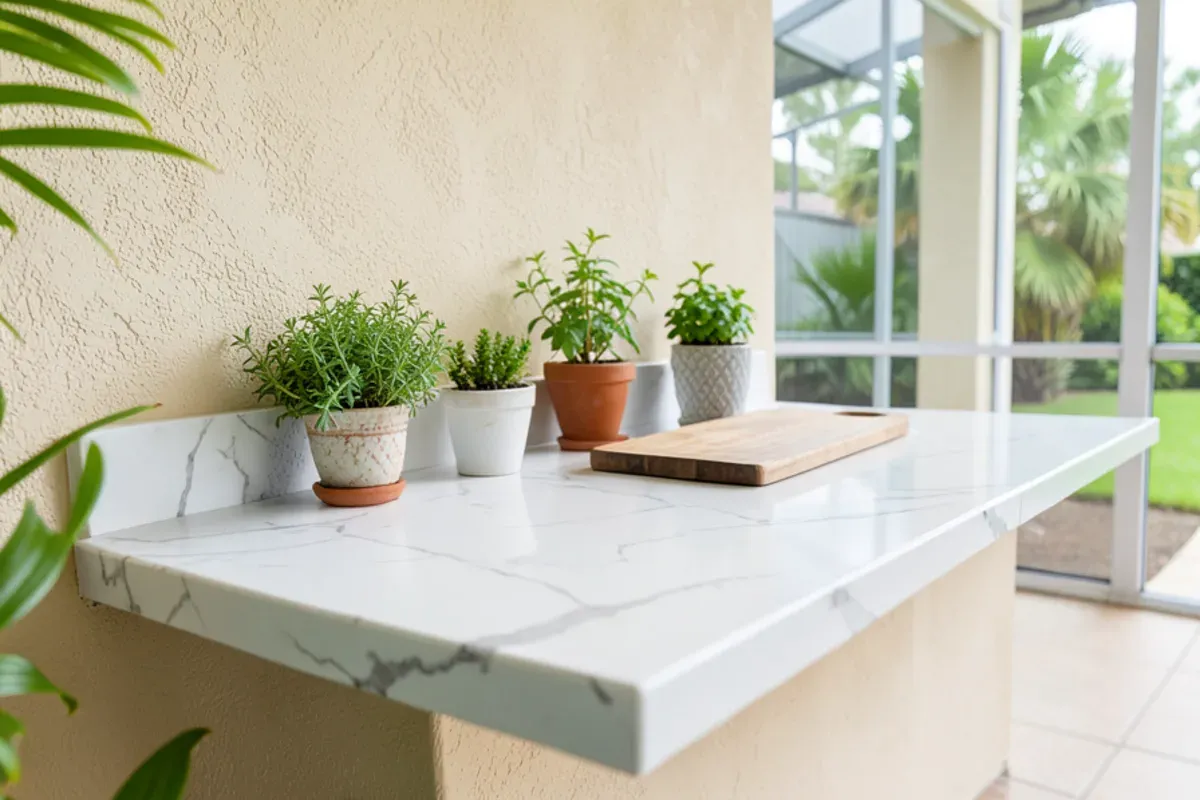
Read the warranty before you choose, because it often settles the matter. Many quartz makers limit coverage to interior installations, and some list direct sunlight, UV exposure or excessive heat among the exclusions. The wording differs from one maker to the next and changes over time, so ask for the current written warranty for the exact product rather than relying on a sales sheet.
If someone offers you quartz for an outdoor kitchen, ask them to point to the line in that warranty that allows it. If they can't, the cost of any fading falls on you, not on the maker.
Already Have Quartz Outside? How to Slow the Damage
- Find where direct sun lands and when, then shade that section with an awning, a shade sail or a fitted cover when the kitchen isn't in use
- Clean with mild dish soap and water; skip harsh solvents and abrasive pads, which are hard on resin
- Keep hot pans and grill tools off the surface, since heat and UV together accelerate discoloration
- Photograph the top each season so you can tell whether a change is real or just the light
If the top is already noticeably yellowed, the realistic fix is replacement with a UV-stable material rather than restoration.
From Our Shop: Bring the Sample Outside First
When someone asks us for quartz on a lanai, we don't argue from a brochure. We bring samples of the quartz they like alongside a porcelain and a pale quartzite, set them on the counter base in the real light, and talk through the difference between the three.
Most of the time, the person decides on their own once they see how close a white porcelain or a light quartzite comes to the look they wanted. And if a spot is truly shaded all day, we'll say so honestly; we just want that decision made with the warranty and the sun in mind.
We're just as plain about the alternatives. Porcelain is thinner, so corners near stools and coolers want a protected edge and its cutouts need careful support underneath. Pale quartzite avoids that weakness but needs sealing like granite. Neither is perfect; both keep their color, which is the one thing quartz in the sun can't promise.
Questions We Hear About This
Is there such a thing as outdoor-rated quartz?
A few manufacturers now sell engineered surfaces marketed specifically for outdoor use, formulated differently from their indoor lines. If you're considering one, read the written warranty for its UV and outdoor terms and ask how long the product has been on the market. Standard indoor quartz is a different product, and its warranty usually says so.
Can quartz fade indoors next to a sunny window?
It can, but slowly. A quartz counter that sits in strong direct sun through a slider or a west window for years may show some yellowing on the exposed section. Glass filters part of the UV, which is why indoor fading is much milder than what happens outside. Blinds or a low-E film during the hottest hours help.
Does a darker quartz color hide UV damage better?
Not reliably. Light colors tend to show yellowing, while darker quartz usually fades or turns chalky instead, so the damage looks different rather than disappearing. Dark tops also absorb more heat in direct sun, which adds to the stress on the resin. If a counter gets regular direct sun, the color choice doesn't change the advice: pick a UV-stable material.
Will a fitted cover protect an outdoor quartz top?
It helps while it's on. A breathable, fitted cover blocks UV when the kitchen isn't in use, which slows the change. It only works if it goes back on after every use, and with Florida humidity the top should be dry before you cover it. When a storm is coming, bring the cover inside instead of leaving it to catch wind.
Can yellowed quartz be restored?
Usually not fully. The discoloration sits in the resin throughout the surface layer, so cleaners don't remove it and polishing rarely brings back the original color. Replacing the affected top with granite, quartzite or porcelain is the practical answer, and the base below can generally be reused if it's level and sound.
The Bottom Line
Quartz is an excellent indoor surface and a risky outdoor one. In Florida sun, choose a material that doesn't rely on resin, or keep quartz to spots you've confirmed stay shaded all day.
If you're weighing materials for a lanai or pool deck in Port St. Lucie or nearby, call us and we'll bring samples to see in your own light.