
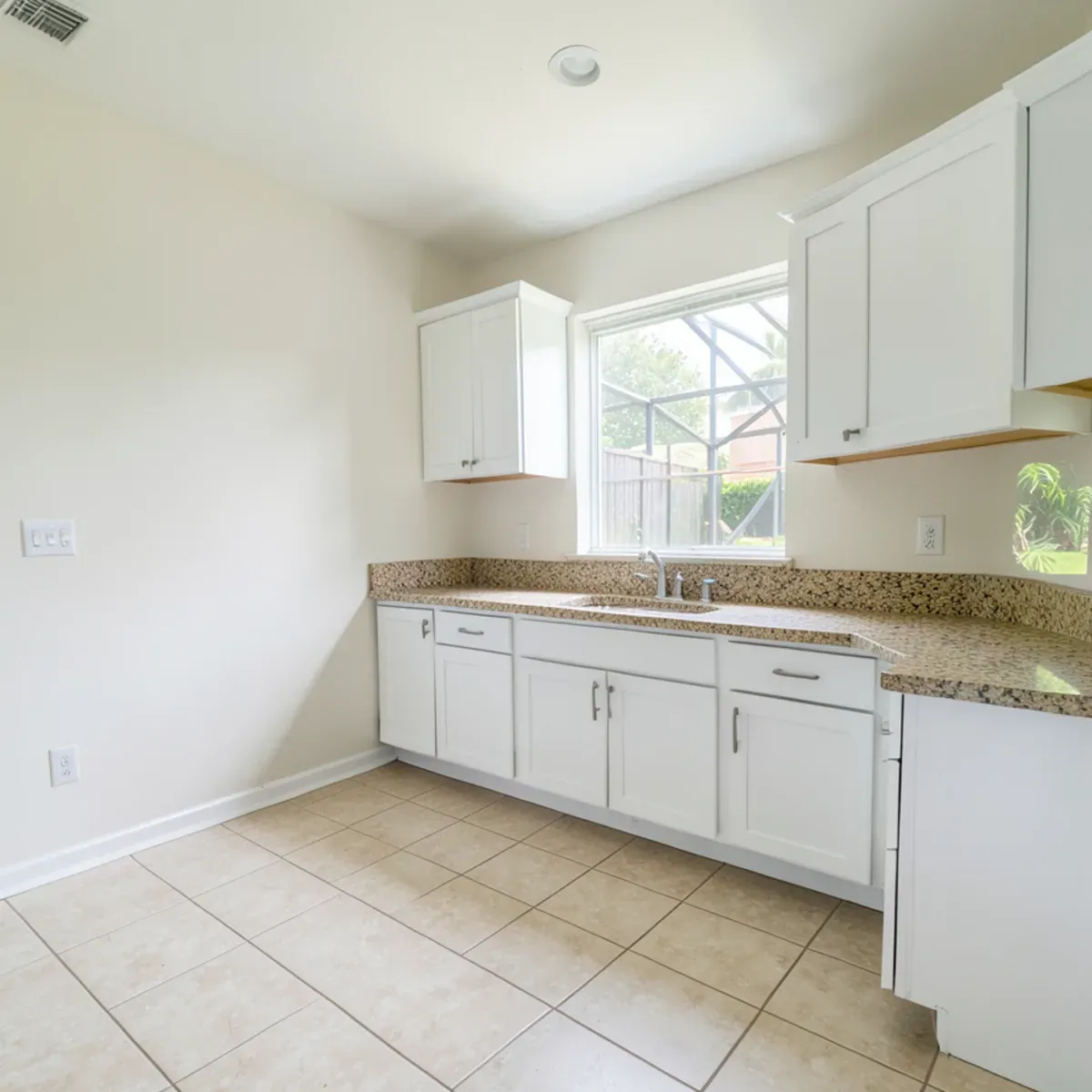
For most rental kitchens, a mid-tone or speckled granite with an eased edge is the most forgiving choice: it tolerates hot pans, hides crumbs and minor wear, and can be resealed between tenants. Patterned quartz is a close second when you want no sealing at all, provided tenants are told to use trivets. Solid white surfaces and marble are the choices landlords most often regret.
A landlord's countertop has a different job from an owner's. It needs to look clean in listing photos, survive people who did not pay for it, and come through a turnover with a wipe-down rather than a repair. Rental kitchens are common around our shop and in neighboring Fort Pierce. In Fort Pierce North alone, the city counted 805 renter-occupied units against 1,541 owner-occupied (City of Fort Pierce Assessment of Fair Housing, 2016–2020), so a lot of local kitchens are living this life.
Here is how to choose a material, a color and an edge that keep a rental kitchen working with as little attention as possible.
What Do Tenants Actually Do to Countertops?
Most damage is not malicious. It comes from habits that an owner would avoid without thinking:
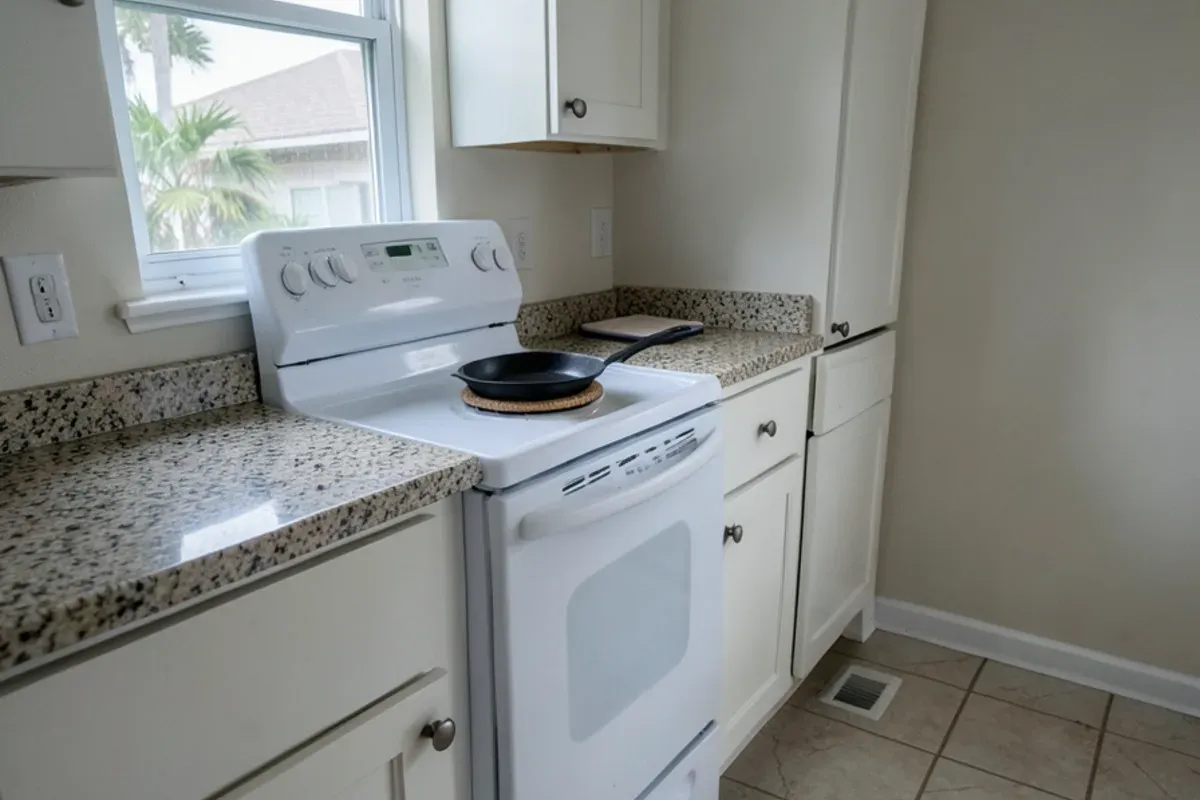
- Setting a pan straight from the burner onto the counter
- Cutting on the surface instead of a board
- Cleaning with bleach, oven cleaner or abrasive powder
- Leaving wine, coffee or cooking oil to sit overnight
- Sitting on an island overhang or using it as a step
- Dropping heavy pots on the edge in front of the sink
Want a straight answer for your kitchen? Call the shop.
Free in-home estimates · Mon–Fri 7:00–4:30 · weekend estimates by appointment
Which Countertop Materials Survive Tenants?
| Material | Tolerates | Weak spot | At turnover |
|---|---|---|---|
| Granite, mid-tone or speckled | Hot pans, knives, heavy use | Needs periodic sealing | Clean, check with a water drop, reseal if needed |
| Quartz, patterned | Stains, harsh-ish cleaning, no sealing | Resin can scorch under hot pans | Clean; look for burn marks near the range |
| Quartz, solid white | Stains if wiped | Shows every scorch and scuff | Often the first surface to look worn |
| Marble | Heat | Etches from lemon, vinegar, many cleaners | Dull spots accumulate quickly |
| Laminate | Low upfront cost | Burns, chips and swells near the sink | Often the reason owners call us to replace |
Quartzite is very tough but usually costs more to buy and fabricate than a rental justifies. For most landlords the realistic choice is granite or quartz, and the deciding question is whether you would rather schedule sealing or risk a burn mark.
Year-round lease or seasonal rental?
The answer can shift with the kind of rental. A year-round tenant on a twelve-month lease gives you a predictable turnover window for resealing granite. A furnished seasonal unit, rented to winter visitors while the owner lives elsewhere, may go many months without anyone checking the stone. For an absentee owner, a patterned quartz that needs no sealing often makes more sense, as long as a trivet sits by the range and the house rules mention it.
Colors and Edges That Hide Wear
Color matters as much as material. Speckled and mid-tone surfaces hide crumbs, water spots and fine scratches; solid black and solid white show all of them. A busy pattern also makes a small chip far harder to spot during a move-out inspection.
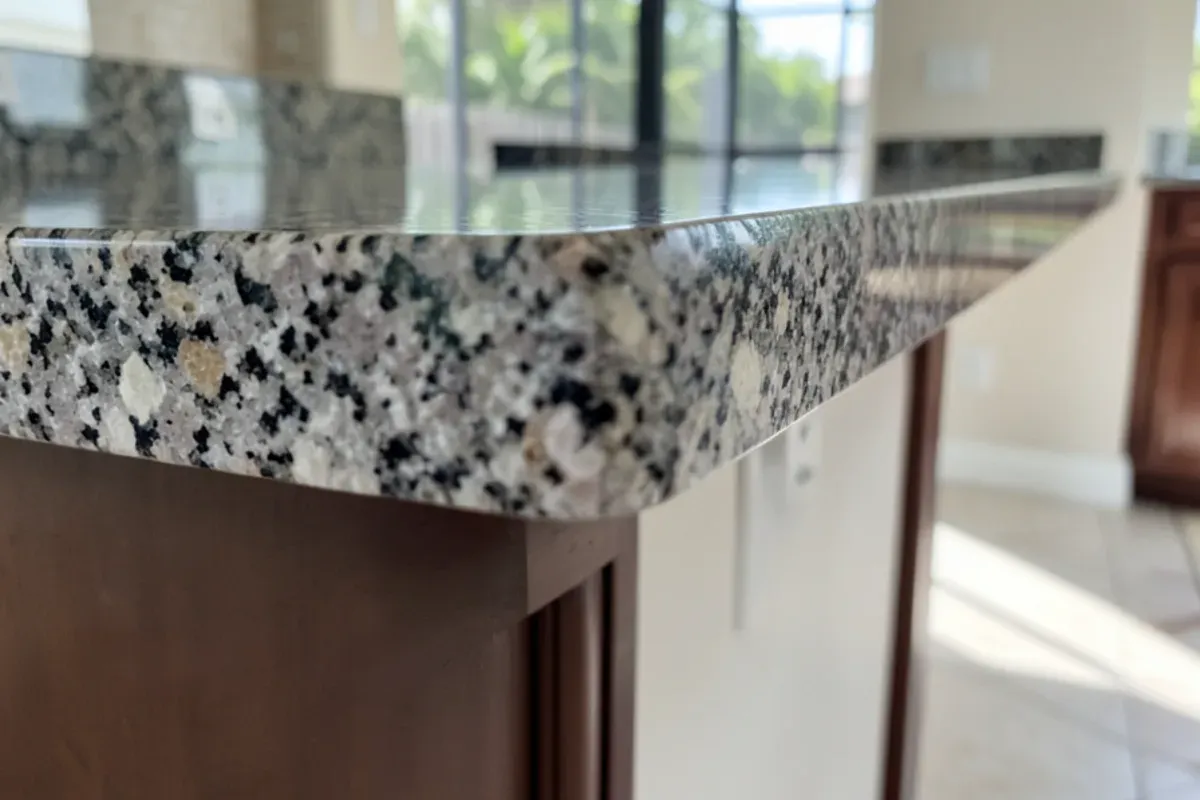
For edges, an eased profile is the practical choice. It has a slightly softened corner that resists chipping better than a sharp square edge, and it has no grooves to trap grime the way an ogee does. If you own several units, standardize on one color and one edge so a damaged piece in one unit can be matched without hunting.
Turning a Unit Fast: Scheduling a Swap Between Tenants
The vacancy window is where the money is lost, so plan the countertop work before the tenant moves out. Our countertop replacement process is built around keeping the cabinets and swapping the tops, which suits a turnover.
- Book the free estimate while the unit is still occupied, with notice to the tenant
- Choose material, color and sink so nothing is undecided on move-out day
- Template as soon as the counters are cleared
- Install, then have the plumber reconnect the sink
- Clean, photograph and list the unit
Timing depends on the material and the week, but speed comes up in our reviews: one homeowner phoned early in the week and had a whole kitchen in place two days later. Read that as past pace, not a commitment. Rental owners in Port St. Lucie are about 25 minutes from our shop, and owners with several units can ask about our commercial countertops work for multi-unit turnovers.
Keeping Costs Down Without Buying Twice
- Keep sound cabinets and replace only the tops
- Use a standard single-bowl or 50/50 undermount sink that is easy to replace
- Choose a 4-inch stone backsplash over a full-height slab
- Skip extra cutouts such as soap dispensers that tenants rarely use
- Pick a widely available color so future repairs and additions can match
A Turnover Checklist for Rental Countertops
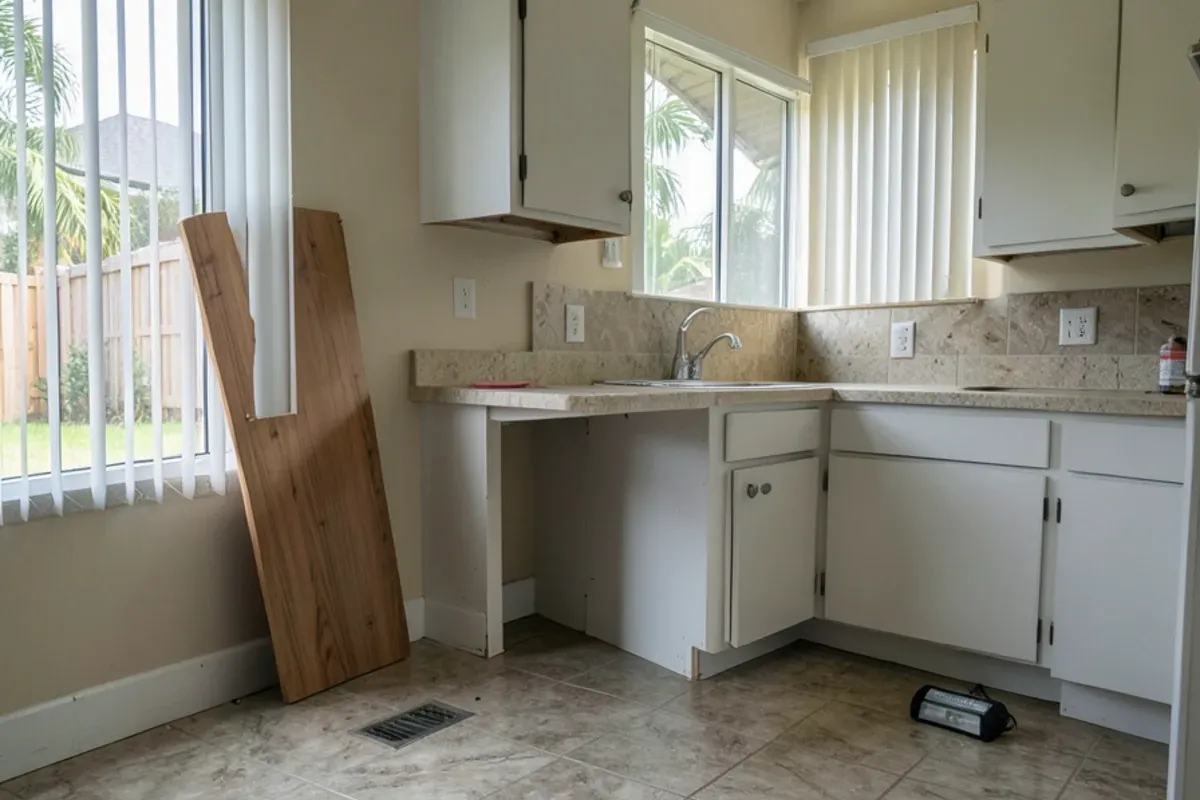
Ten minutes with the counters at each move-out catches small problems while they are still small. Walk the kitchen with a flashlight and a glass of water:
- Photograph every run and the island, dated, so move-in and move-out conditions can be compared.
- Drip water on granite near the sink and range; when the spot turns dark and stays that way for a few minutes, reseal before the next tenant.
- On quartz, look along the counter beside the range in raking light for pale or brown scorch marks.
- Check the caulk line where the stone meets the backsplash and around the sink rim; gaps there let water reach the cabinet.
- Empty the cabinet under the sink and push down on the deck with your palm; softness or staining means a leak that needs fixing now.
- Run a fingertip along each seam for lifting or a dark line, and look at the corner beside the dishwasher for chips.
Most of those checks cost nothing to fix early. A failed caulk line or a dripping trap ignored for two or three leases is how a sound top ends up on a ruined cabinet.
From Our Shop: What a Rental Kitchen Tells Us at Turnover
When we come to measure a rental, the old tops usually tell the story: a burn ring by the range, a swollen seam at the sink, a chipped corner near the dishwasher. Those three spots are where we steer owners toward heat-tolerant stone, a well-supported sink cutout and an edge without a sharp corner.
We also check the sink base on every rental. Tenants rarely report a slow drip, and by the time the countertop is replaced the cabinet floor may be soft. Catching it at the estimate keeps a new top from sitting on a weak box.
We are also candid about how much stone a unit needs. An entry-level granite in a forgiving color usually rents a unit just as well as a premium slab, and the money saved is better spent on a sound sink base or a new faucet. Where the cabinets themselves are failing, we will say so: setting new stone on boxes that will not survive the next two tenants means paying for the countertop twice.
Questions We Hear About This
Is granite or quartz better for a rental kitchen?
Granite is usually more forgiving with tenants because it handles hot pans and its speckled pattern hides wear; the trade-off is resealing every so often, easy to fold into a turnover. Quartz needs no sealing and resists stains, but a careless tenant can scorch the resin. If you go with quartz, choose a patterned color and leave a trivet in the kitchen.
Can countertops be replaced while a tenant still lives there?
It is possible, but it is easier when the unit is empty. An occupied replacement means notice to the tenant, a day or more without a usable sink and a kitchen that has to be emptied twice, once for the template and once for install. Most owners we talk to schedule the work for the gap between leases.
Does replacing rental countertops need a permit?
Usually not for a like-for-like swap. The county's exemption list lets an owner replace a sink without a permit as long as it does not move (St. Lucie County Government). Relocating plumbing or adding circuits is licensed work, and Fort Pierce city addresses need separate trade permits for it. At the estimate we flag anything in your plan that crosses that line.
How can we keep tenants from damaging new countertops?
Make the right habit the easy one. Leave a trivet and a cutting board in the kitchen, add a one-page care note to the move-in packet naming the cleaners to avoid, and record the counters' condition in dated photos at move-in. Those photos also settle any disagreement about wear when the lease ends, which matters more than the cost of the trivet.
The Bottom Line
A rental countertop should be boring in a good way: a forgiving color, a tough material, a simple edge and a layout that is easy to repair. Get those choices right once and every turnover becomes a cleaning job instead of a construction job.
How we measure, cut and set stone is explained on our countertop installation page. Ring us before the current lease runs out and we will price a top that suits the unit, at no charge.