
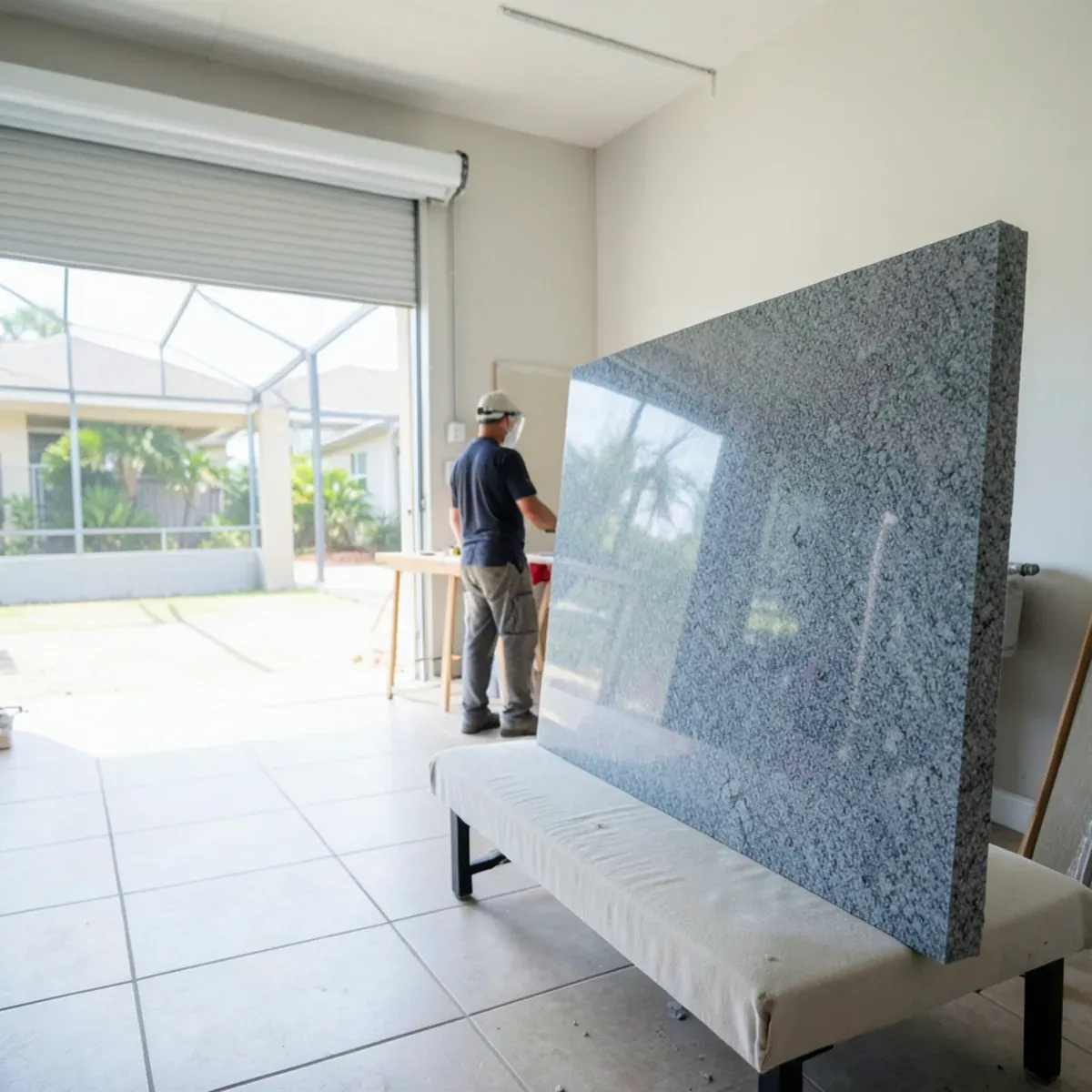
Countertop fabrication in Fort Pierce is the shop half of our work: after templating your cabinets, we lay that template on your chosen slab, cut each piece, shape and polish the edges, make the sink and cooktop cutouts and plan every seam before anything leaves for install.
This page follows a slab through those steps. Fabrication is part of our countertop installation in Fort Pierce service, and because we both cut and set the stone, the people who measured your kitchen are the ones who answer for how the pieces fit.
Some materials need their own handling in the shop. Quartzite countertops are very hard and slow to cut and polish, while porcelain countertops are thin and need gentle edge work. We fabricate for kitchens, bathrooms, bars, fireplaces and outdoor kitchens alike.
Part of our countertop installation in Fort Pierce services.
What's Included
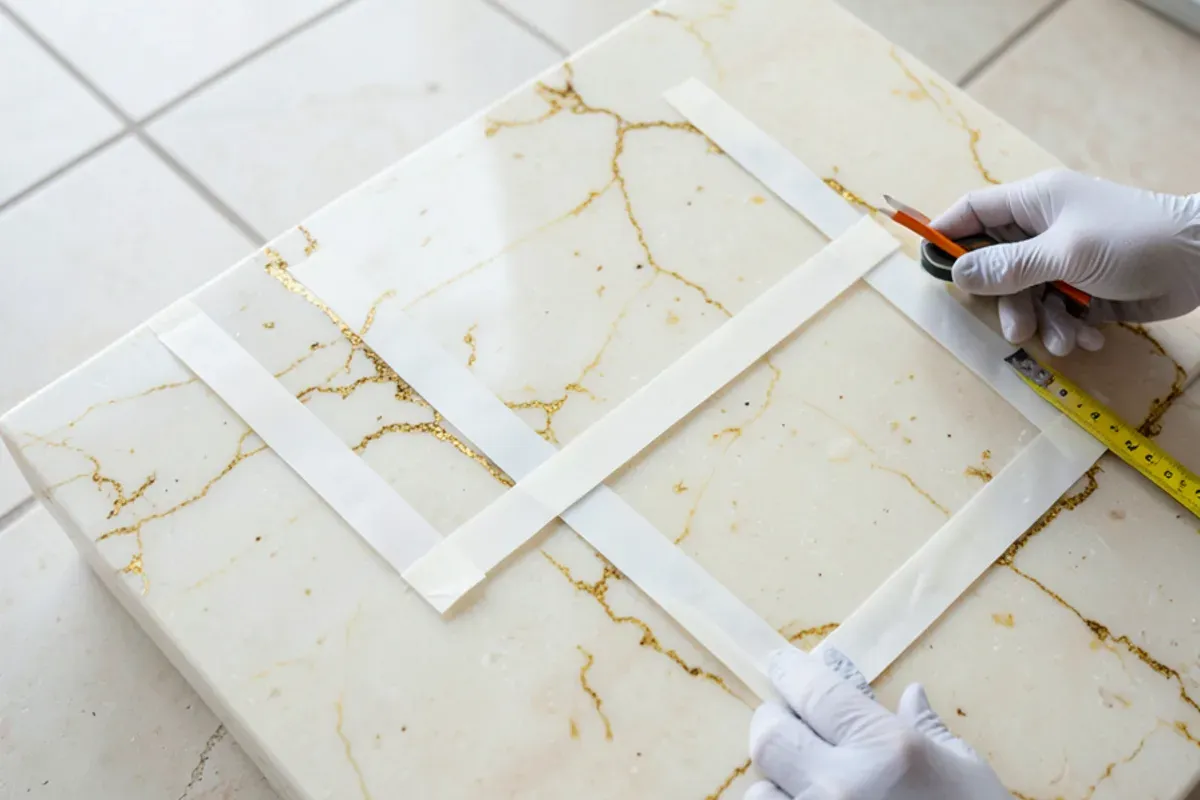
Fabrication covers everything between the template and the truck. The template made at your cabinets becomes the cutting pattern, so the first job in the shop is laying it over the slab with you: which part of the stone becomes the island, where the strongest veining lands and where any natural flaw ends up as offcut. Then each piece is cut to the outline, with scribed edges for walls that bow and extra care on the narrow strips in front of a sink. Visible edges are shaped to the profile you picked and polished to match the face. Openings for the sink, cooktop, faucet and outlets are cut and finished, and thin sections get added support. Before anything is loaded, every piece is laid against the template one more time. If a piece does not match, it is fixed in the shop rather than trimmed in your kitchen.
- A full-size template of every counter run, made on site with your fixtures present
- A layout review showing which part of the slab becomes each piece, with vein and color placement agreed
- Cutting of each piece to the template, including scribed edges for walls that are out of square
- Edge shaping and polishing to the profile you pick
- Sink, cooktop, faucet and outlet openings cut and finished, with added support for narrow strips beside them where the stone needs it
- An inspection of every piece against the template before delivery
Why Do Older Treasure Coast Kitchens Need Custom-Cut Stone?
Pre-cut tops assume square walls and standard cabinet depths. Many houses here have neither, which is when cutting to a template earns its cost:
- Block-and-plaster walls in 1970s–80s CBS homes are rarely straight, so a stock top leaves gaps a backsplash cannot hide
- Original cabinets built deeper or shallower than today's standard need a top cut to the real depth
- Angled peninsulas, clipped corners and curved breakfast bars from that era have no off-the-shelf match
- An outdoor grill island needs grill, side-burner and sink openings placed to the exact equipment, measured from the units themselves rather than a brochure
- A small vanity or bar top can come from a remnant, but only if it is cut to fit
- An add-on piece, such as a new bar or desk, has to match an existing edge profile and thickness
From Template to Slab: How Custom Countertop Fabrication Works
Fabrication starts in your kitchen, not in the shop. The template records the true shape of the cabinets, walls and fixtures, including the spots where a wall bows or a corner is not quite 90 degrees. Everything cut later is measured from that pattern, so it has to be right.
- Template: a full-size pattern of each run is made on site, with the sink, faucet and cooktop in the room so openings land exactly
- Layout on the slab: the template is placed over the stone to decide which area becomes each piece, keeping flaws out and putting the strongest figure where you will see it
- Cutting: pieces are cut to the outline, with extra care on long narrow strips and inside corners
- Edging: visible edges are shaped to your profile, from a plain eased edge to an ogee or a mitered build-up
- Cutouts: sink, cooktop and faucet openings are cut and their inside edges smoothed, then polished where an undermount sink leaves them on show
- Polishing and checking: edges are brought to the same finish as the face, and each piece is laid against the template one last time
Where Will the Seams Go, and Who Decides?
You do, with our advice. Seam planning happens at the layout stage, when the whole slab and the whole template can be seen together. The aim is seams that are short, out of the way and matched in pattern.
- Seams go where the stone is structurally sound and the joint is least visible, often at a corner or where a run turns
- We keep them out of the thin band of stone in front of a sink and behind a cooktop
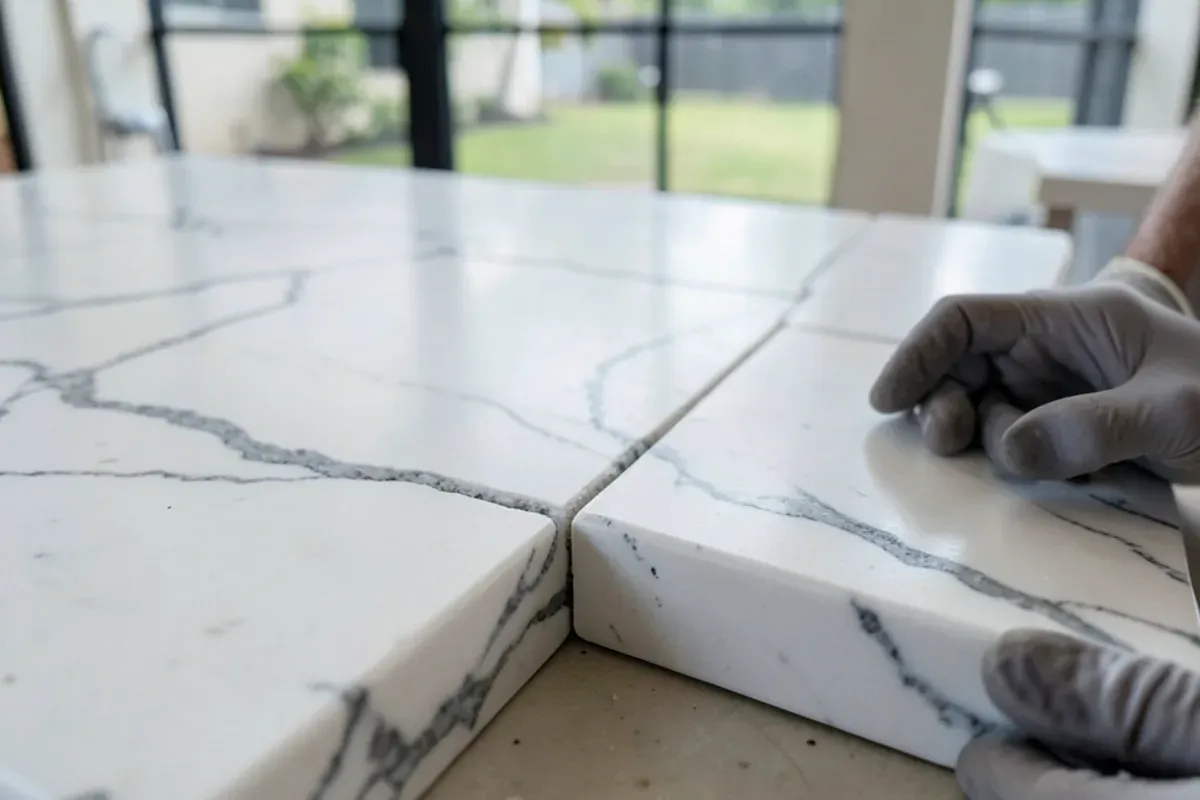
- On veined material the two sides are laid out so the lines carry on across the joint
- Island tops stay in one piece whenever slab size and access to the house allow
Once you approve the layout, seam positions are fixed. On install day each joint is glued with tinted epoxy and then flattened, so the surface reads as one top.
Which Stones Are Hardest to Fabricate?
Each material behaves differently during cutting and polishing, and that shows up in both price and schedule.
| Material | Cutting | Edges | Shop notes |
|---|---|---|---|
| Granite | Steady; hard but predictable | Holds crisp and rounded profiles well | Natural fissures are checked during layout |
| Quartz | Consistent from slab to slab | Takes most profiles cleanly | Resin must not be overheated while polishing |
| Marble | Cuts easily | Soft; corners chip and scratch if handled carelessly | Honed or polished finish matched on every edge |
| Quartzite | Slow; very hard | Polishing takes longest of all | Shop labor runs higher than granite |
| Porcelain | Precise, with little room for error | Eased or mitered on most slabs | Pattern may sit near the surface, so deep profiles expose the body |
That is why the same kitchen can cost more in quartzite than in granite even when the two slabs are priced alike.
Talk to the shop before you buy a slab.
Free in-home estimates · Mon–Fri 7:00–4:30 · weekend estimates by appointment
Choosing a Local Granite Fabricator on the Treasure Coast
When the shop cutting your slab is a short drive from your home, problems get solved in person. If a wall proves further out of square than expected, or you decide on a different corner radius, the people making the change already know your kitchen.
Our shop is at 3625 Metzger Rd in Fort Pierce North. We fabricate for homeowners and contractors, for full kitchens and for small pieces such as vanity tops, bar tops and fireplace hearths, which can often be cut from remnants left after larger jobs. A Google reviewer summed up the result in two words: "Great craftsmanship."
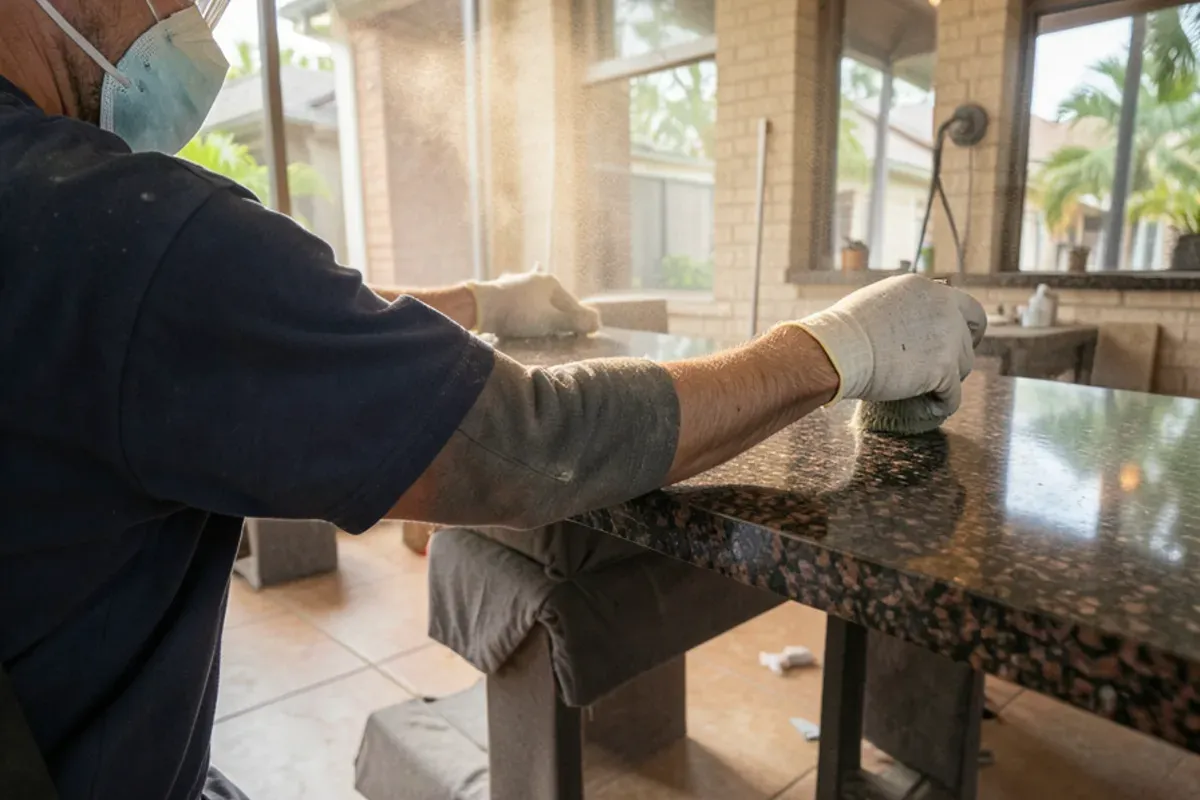
How the Job Runs, Step by Step
- First call. Tell us the material and the rooms, and we set up an estimate visit.
- Measure and select. We take measurements, help you settle on a slab and edge profile and send a written estimate.
- On-site template. A full-size template is made at your cabinets with sinks and faucets present.
- Layout approval. We show you where pieces and seams come from on the slab and adjust before any cutting.
- Cut, edge and polish. The shop cuts the pieces, profiles and polishes the edges and finishes every opening.
- Deliver and install. Pieces travel upright and padded to your home, where our crew sets, bonds and seals them.
Questions about custom countertop fabrication? Call the shop.
Free in-home estimates · Mon–Fri 7:00–4:30 · weekend estimates by appointment
What Affects the Price
Fabrication is priced as part of your written estimate after we measure. We break out the shop work so you can see how each choice affects it:
- Material hardness: quartzite and porcelain take more shop time than granite or quartz
- Linear feet of finished edge and the profile chosen; ogee, full bullnose and mitered edges add labor
- How many cutouts there are and whether they are polished undermount openings
- Radius corners, curves and walls that need scribing
- Vein matching on patterned slabs, which can use more material
- Small add-on pieces such as splashes, window sills and hearths
- Slab size against your layout: a long island that needs an oversized slab, or a layout that forces an extra seam
- Whether the slab comes from us or from another supplier, since an outside slab must be inspected before templating
- Finish: honed and leathered faces need their edges matched to that finish, which is slower than polishing
Stone Fabrication Rules: Silica Dust and State Licensing
Cutting and polishing stone releases respirable crystalline silica. OSHA's general-industry silica standard (29 CFR 1910.1053) applies to fabrication shops, and OSHA and NIOSH issued a joint hazard alert on countertop manufacturing, finishing and installation, updated in 2026 (NIOSH). Engineered quartz and quartzite are both high in silica, so the heavy cutting belongs in the shop, and on-site trimming in your home is kept to small adjustments.
Fabrication itself needs no Florida state license under DBPR guidance. Anything the finished top connects to, such as a relocated drain or a new outlet in a stone splash, is licensed and permitted work.
Why VD Quality Design for Custom Countertop Fabrication
- Template, fabrication and install stay with one family-run business based in Fort Pierce North
- Victor plans the slab layout with you, so seam and vein decisions come from the person who measured your kitchen, not from someone who never saw it
- We work granite, quartz, marble, quartzite and porcelain, and cut remnants for smaller projects such as vanities and hearths
- A 4.9-star Google rating over 31 reviews, with reviewers singling out cuts, seams and craftsmanship
- Free in-home estimates, an A+ BBB rating, shop work for contractors as well as homeowners, with cash, Zelle, checks and cards all accepted
Reviews From Custom Countertop Customers
V.D Quality Design Granite & Marble holds a 4.9-star average from 31 Google reviews (checked November 2026).
“I couldn’t be happier with my new quartz installation! … The installer was punctual, detail-oriented, and took great care to ensure everything was perfect. The cuts and seams are flawless, and the finish is absolutely stunning. They went above and beyond to keep the area clean and protect my home during the process.”
“Great craftsmanship. The team was very professional and victor is very attentive, expedient and affordable!”
“Fantástic job!!! Great price, awesome quality and on time!! This guys are very professional and for sure there going to go with us in the next project”
Where We Install Custom Countertop Fabrication
Finished pieces leave our Fort Pierce North shop for homes across the Treasure Coast: minutes away in Fort Pierce, south to White City and River Park, and north along US-1 to Florida Ridge in Indian River County.
- Fort Pierce North: The shop is in Fort Pierce North, so a re-check of a wall or corner here is a short trip.
- Fort Pierce: Downtown-area block homes have walls far enough out of square to need scribed backs.
- White City: Covered outdoor kitchens on bigger lots need grill and burner openings cut to the unit.
- River Park: 1960s–70s homes on the North Fork often have non-standard cabinet depths.
- Florida Ridge: Clipped-corner peninsulas from older subdivisions along US-1 are cut from the template, not stock sizes.
- Palm City: Large custom islands across the St. Lucie River often need an oversized slab and careful layout.
- Vero Lake Estates: Owner-built homes on large lots rarely have square corners, so every piece is templated.
- Hobe Sound: Pieces travel upright and padded for the longer run down US-1 to south Martin County.
- Sewall's Point: Waterfront estates between the two rivers ask for mitered edges and vein-matched seams.
Custom Countertop Fabrication FAQs
Do you fabricate slabs that we buy elsewhere?
Ask us before you buy. Whether we can work a slab from another supplier depends on its thickness, condition and whether it is big enough for your template with seams where you want them, and we need to see it before templating. Many owners find it simpler to choose material with us, so slab, layout and result are one responsibility.
Which edge profiles can you fabricate?
The common ones: eased, bevel, half bullnose, full bullnose, ogee and mitered build-ups that make a 2 cm slab look thicker. Eased and bevel edges resist chipping best in a busy kitchen. Porcelain is usually limited to eased or mitered edges because of how its pattern sits in the slab. Bring a photo if you have a particular profile in mind.
How do you protect the slab during cutting and transport?
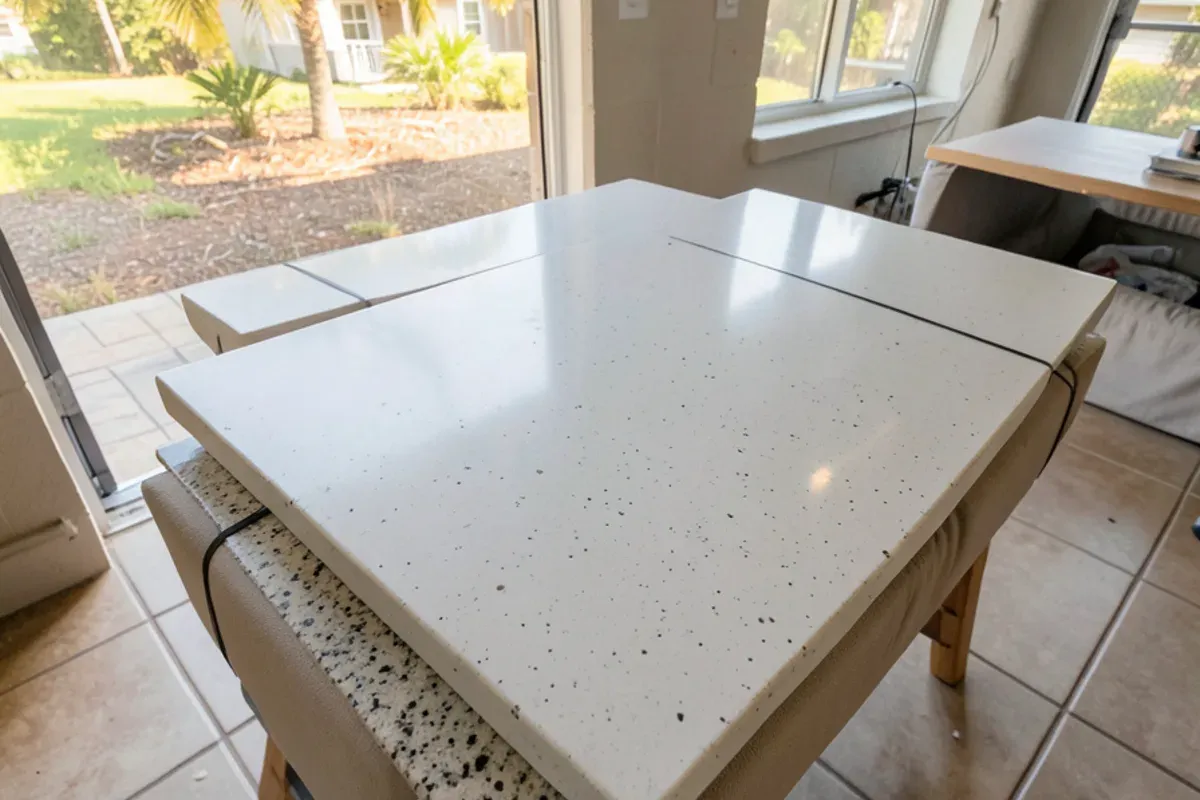
Stone is strongest on edge, so slabs and finished pieces travel upright, never flat. Narrow strips beside sink openings get extra support, corners are padded and pieces are strapped down for the drive. In the shop, polished faces are kept off rough surfaces. At your home each piece is carried in on edge and laid flat only once it reaches the cabinets.
Can you fabricate radius and curved countertops?
Yes. Rounded corners, curved island ends, bowed bar fronts and edges that wrap a column are all cut from the template, which records the curve exactly. Curves take more shop time than straight cuts and can use more of the slab, so they appear as their own line on the estimate. Tight inside curves are easier in granite than in porcelain.
Why does templating wait until the cabinets are installed?
Because we cut to what is actually there. Cabinets shift slightly as they are leveled and fastened, and walls are rarely straight. Templating on final, secured cabinets, with the sink and faucet in the room, is what lets each piece drop into place on install day without trimming in your kitchen. New cabinet jobs get templated right after the boxes are set.
Related Services
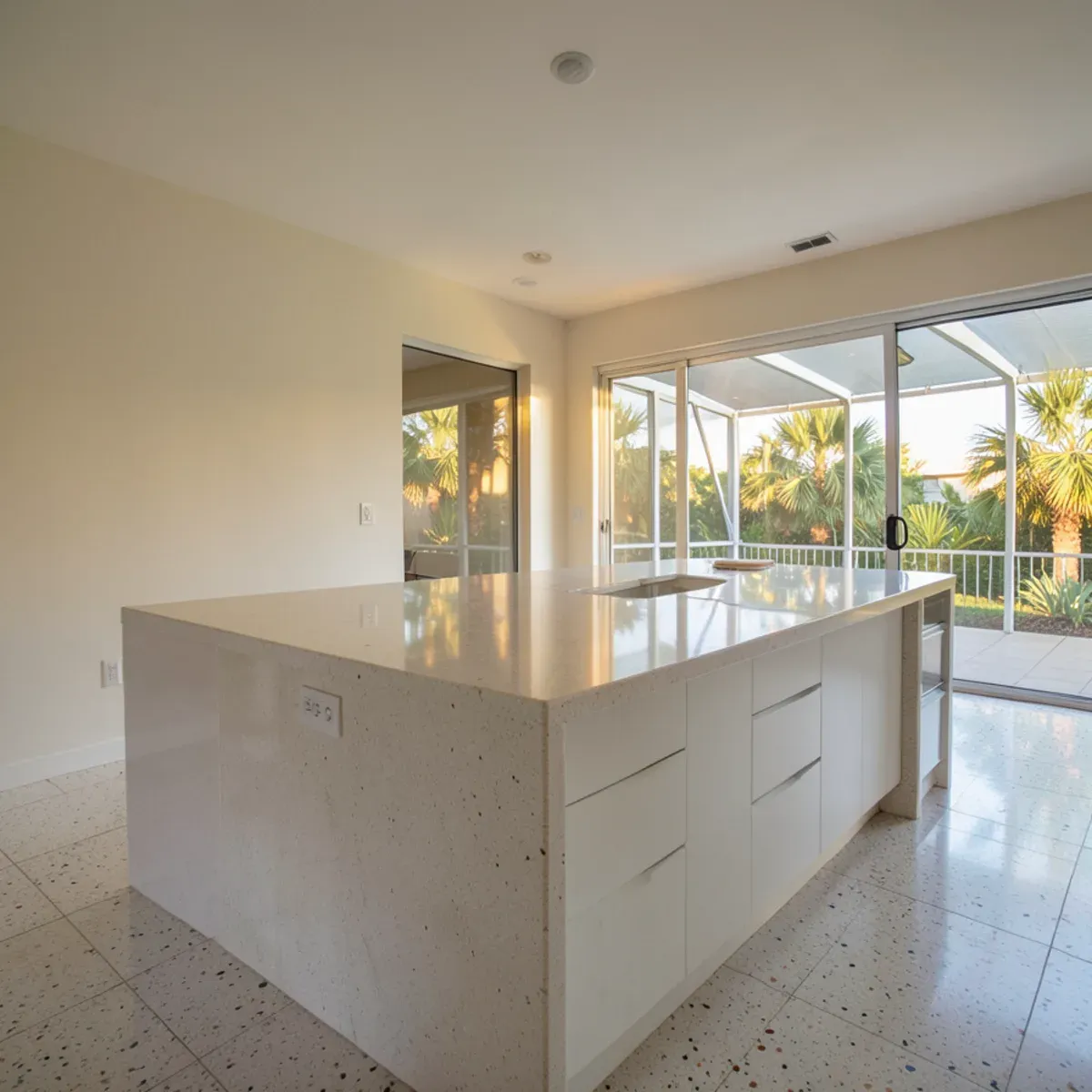
Countertop Installation
Countertop installation in Fort Pierce: granite, quartz, marble and quartzite measured, fabricated and installed by our own team.
Learn more →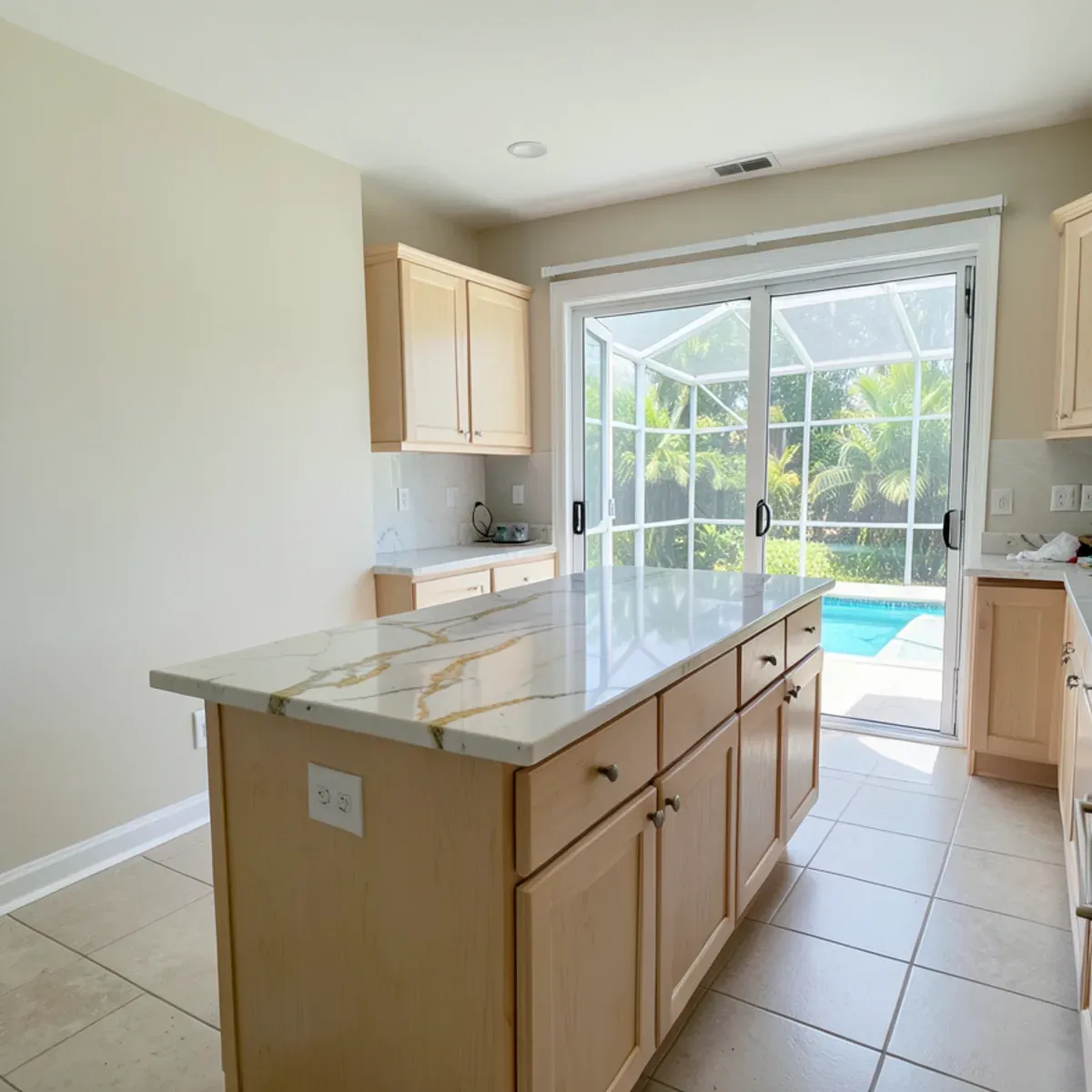
Quartzite Countertops
Quartzite countertops in Fort Pierce: hard natural stone with marble-like veining, fabricated and sealed for Florida kitchens.
Learn more →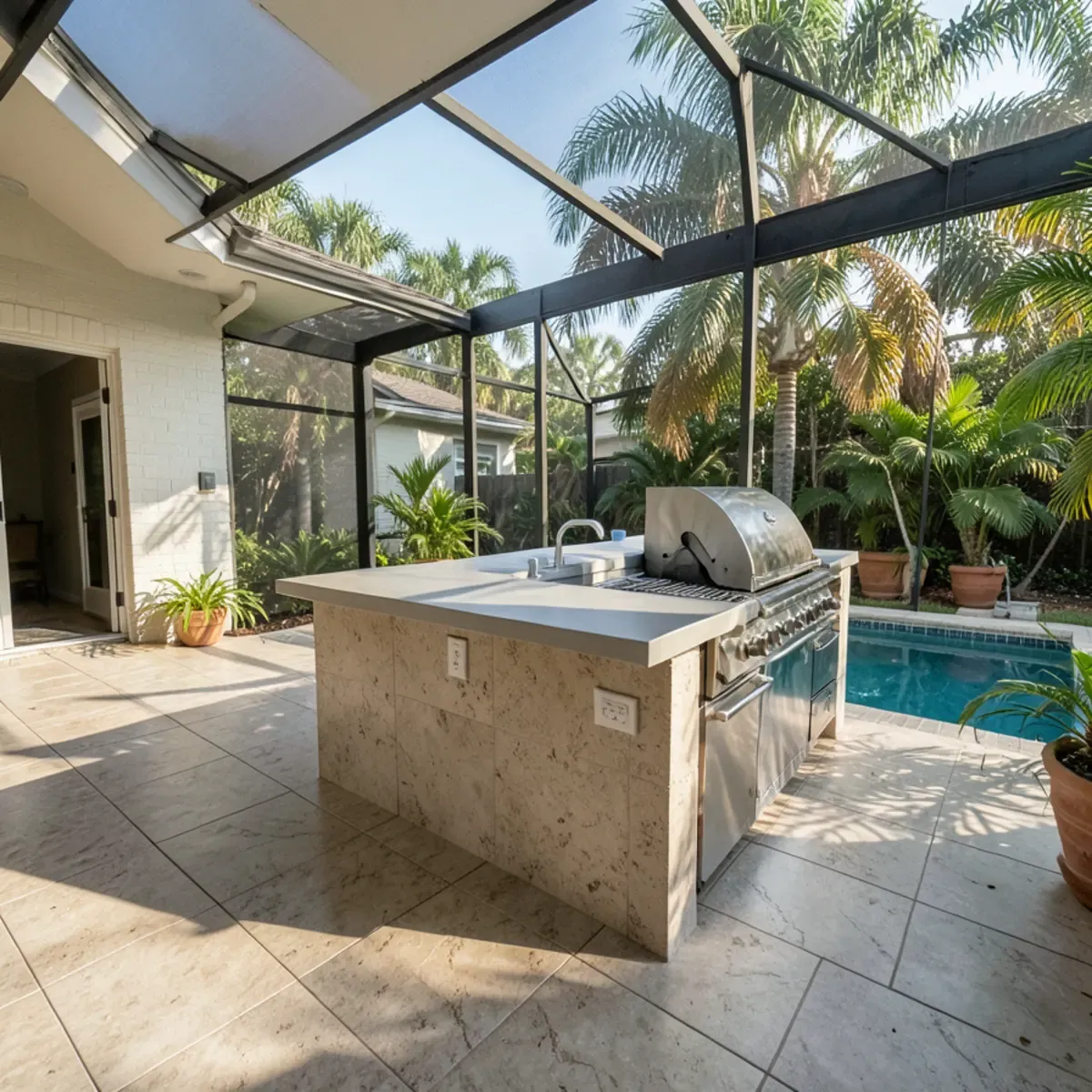
Porcelain Countertops
Porcelain and sintered-stone countertops in Fort Pierce: thin, UV-stable slabs for modern kitchens and sun-exposed outdoor tops.
Learn more →